Loading Tutorstips...
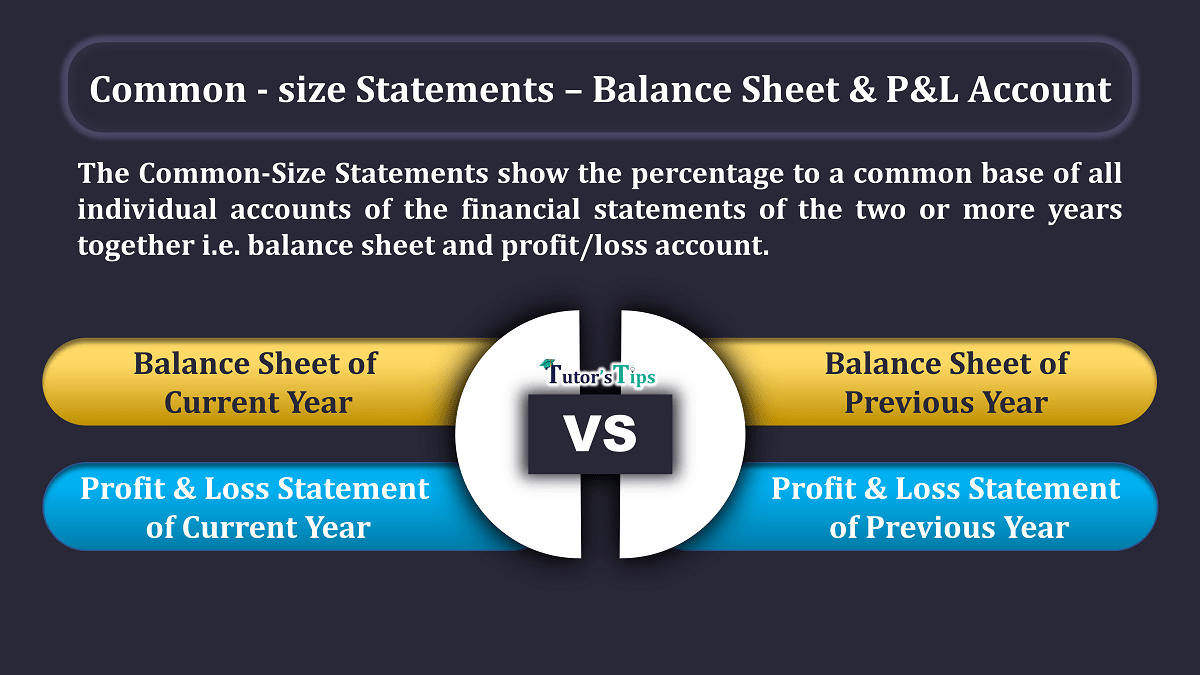
The Common-Size Statements show the percentage to a common base of all individual accounts of the financial statements of the two or more years together i.e. balance sheet and profit/loss account.
The Common-Size statement is that statement which shows the percentage to a common base of all accounts of the financial statement of the business for the period of more than two years. The components of the two or more years are shown side by side in vertical order on the same page and then calculate the percentage on the common base of net sales of both years of all the elements. It is the tools for the analysis of the financial statements of the business.
The two types of financial statements are included in the process of the comparison of the financial statements under the method of Common-Size Statements. These both are explained as follows:
The Balance Sheet is the statement showing the position of the assets and liabilities of the business in a particular accounting period. It is a list of balances of ledger account of assets, capital, and liabilities. The value of assets showing which we can realize from the market and The value of Liabilities shows which we have to pay in the future. Capital shows the amount invested by the owner into the business entity.
The format of the balance sheet shown as follows with an explanation of each column:
Common-Size statement of Balance Sheet
| Particulars | Note No. | Absolute Amounts | Percentage of Balance Sheet total | ||
|---|---|---|---|---|---|
| Figures as at the end of Previous Year (Rs) |
Figures as at the end of Current Year (Rs) |
Figures as at the end of Previous Year (Rs) |
Figures as at the end of Current Year (Rs) |
||
| (1) | (2) | (3) | (4) | (5) | (6) |
| I. Equity and Liabilities | |||||
| 1. Shareholders’ Funds | |||||
| (a) Share Capital | |||||
| (b) Reserves and Surplus | |||||
| (c) Money Received against Share Warrants | |||||
| 2. Share Application Money Pending Allotment | |||||
| 3. Non-Current Liabilities | |||||
| (a) Long-term borrowings | |||||
| (b) Deferred Tax Liabilities (net) | |||||
| (c) Other long-term liabilities | |||||
| (d) long-term Provision | |||||
| 4. Current Liabilities | |||||
| (a) Short-term Borrowings | |||||
| (b) Trade Payables | |||||
| (c) Other current Liabilities | |||||
| (d) Short-term Provision | |||||
| Total | |||||
| II. Assets | |||||
| 1.Non-Current Assets | |||||
| (a) Fixed Assets: | |||||
| (i) Tangible Assets | |||||
| (ii) Intangible Assets | |||||
| (iii) Capital Work-in-progress | |||||
| (iv) Intangible Assets under development | |||||
| (b) Non-Current Investment | |||||
| (c) Deferred Tax Assets (net) | |||||
| (d) Long-term loans and advances | |||||
| (e) Other Non-Current Assets | |||||
| 2. Current Assets | |||||
| (a)Current Investment | |||||
| (b)Inventories | |||||
| (c) Trade receivable | |||||
| (d) Cash and Cash equivalents | |||||
| (e) Short-term loans and advances | |||||
| (f) Other current Assets | |||||
| Total | |||||
Profit and loss account is the statement which shows all indirect expenses incurred and indirect revenue earned during the particular period. It is prepared to find out the Net Profit/loss of the business for the particular accounting period. It is calculated by deducting indirect expenses from the Gross Profit/Loss. and adding indirect income/revenue int the Gross Profit/Loss.
Net Profit/Loss = Gross Profit/Loss + Indirect Income – Indirect Expenses
The format of the balance sheet shown as follows with an explanation of each column:
Common-Size statement of Profit and Loss Account
| Particulars | Note No. | Absolute Amounts | Percentage of Balance Sheet total | ||
|---|---|---|---|---|---|
| Figures as at the end of Previous Year (Rs) |
Figures as at the end of Current Year (Rs) |
Figures as at the end of Previous Year (Rs) |
Figures as at the end of Current Year (Rs) |
||
| (1) | (2) | (3) | (4) | (5) | (6) |
| I. Revenue from Operation (Net Sales) | |||||
| II. Other Income | |||||
| III. Total Revenue (I+II) | |||||
| IV. Expenses | |||||
| (a) Cost of Material Consumed | |||||
| (b) Purchases of Stock-in-trade | |||||
| (c) Changes in Inventories of Finished Goods, Work-in-Progress and Stock-In-Trade | |||||
| (d)Employees Benefit Expenses | |||||
| (e) Finance Costs | |||||
| (f) Depreciation and Amortisation Expenses | |||||
| (g) Other Expenses | |||||
| Total Expenses | |||||
| V. Profit Before Tax (III-IV) | |||||
| VI. Less: Income Tax | |||||
| VII. Profit after Tax | |||||
Thanks for reading the topic.
Accounting & Commerce Educator
Sarbjit Singh holds a B.Com and M.Com degree and has over 12 years of teaching experience in double entry bookkeeping, financial accounting, and business studies.
The Common-Size Statements show the percentage to a common base of all individual accounts of the financial statements of the two or more years together i.e.…
Class 11 and Class 12 commerce students, and CA Foundation aspirants, studying Advanced Financial Accounting.
Yes — this page includes a short interactive quiz so you can check your understanding straight away.
27 November 2022
8 January 2023