Comprehensive academic guide covering core concepts of Financial Accounting Terminology.
Syllabus-aligned study material with detailed definitions, formats, and practical examples.
Interactive check: Includes a custom practice quiz at the bottom of the article to self-evaluate knowledge.
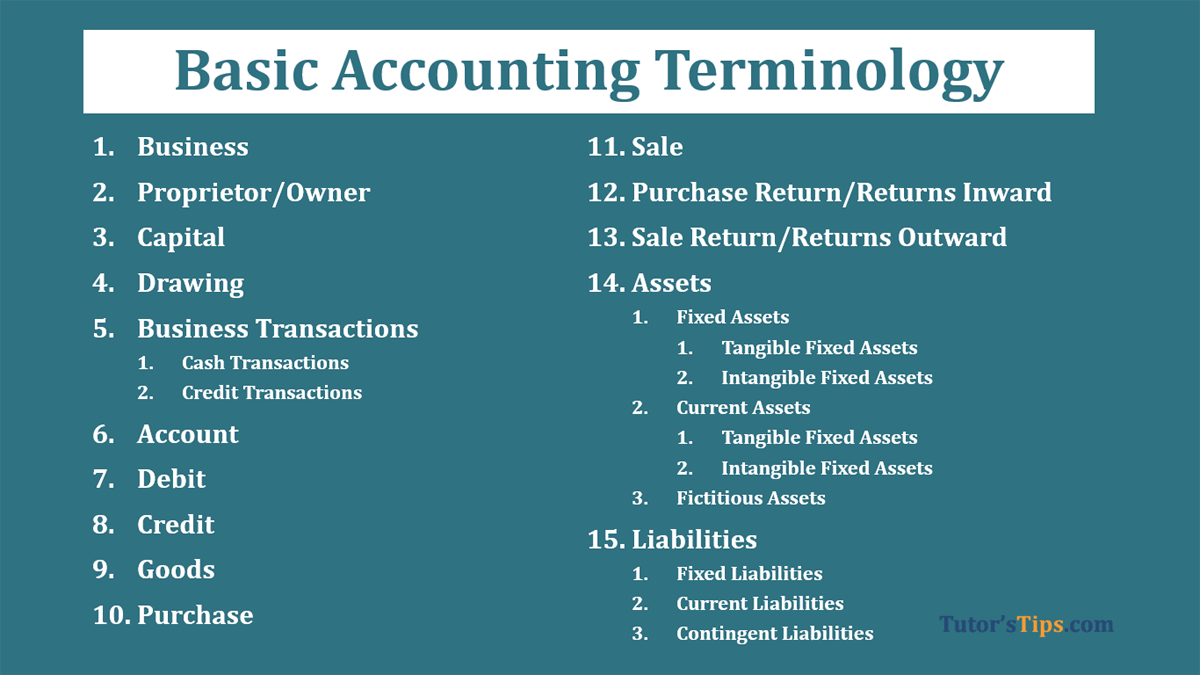
If you are starting the study of Financial Accounting then firstly you have to know about important/Basic Financial Accounting Terminology. Because these terminologies are basic of accounting language like Alphabets for the English Language. These are the following: -
Subscribe to our Youtube Channel
1. Business
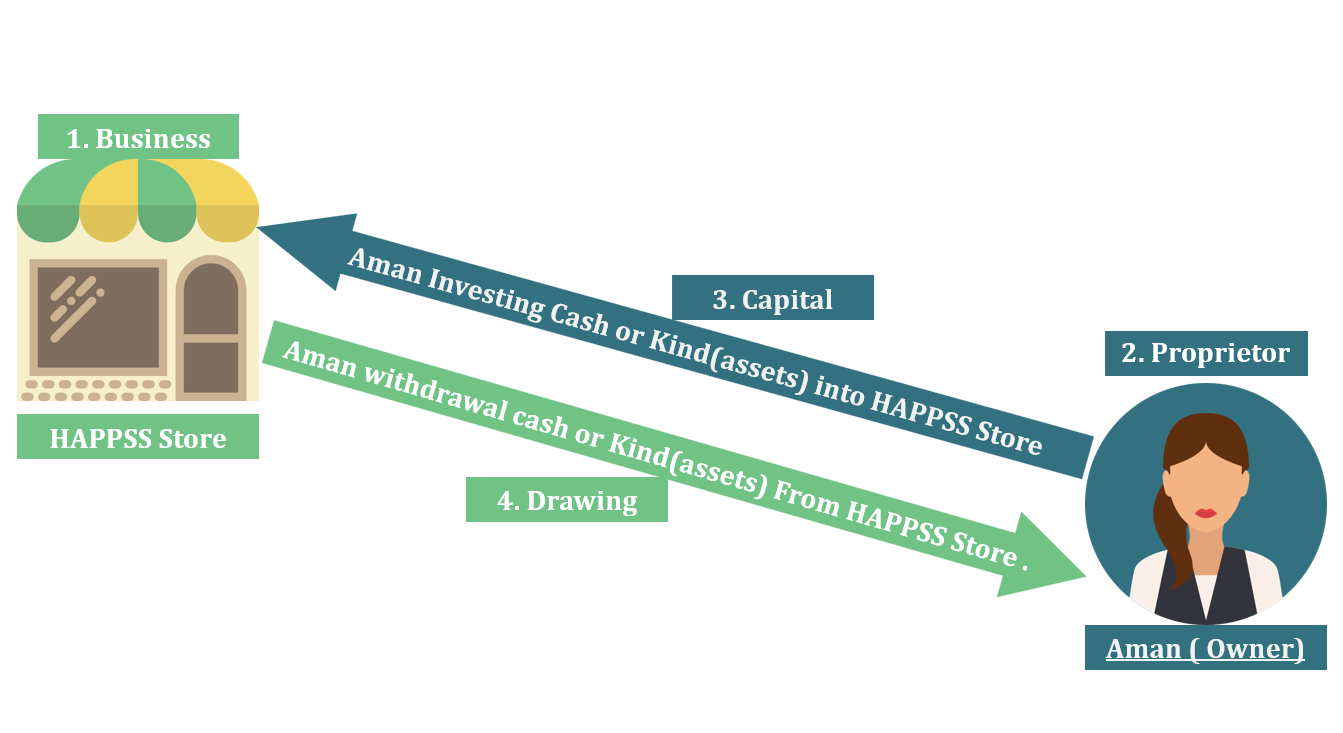
An organization or economic system where goods and services are exchanged for one another or for money.
The business has a different identity in the eyes of law.
Like:- ABC ltd., HAPPSS Store, Bharat Hospital, S.D. College, or every type of shop, hotel, hospital, college, factory, offices.
2. Proprietor/Owner
Who runs an organization and invests their money in business. An owner has the right to take any decision for their business.
He has a different identity for their business.
Like: - Amanpreet Kaur, Sarabjit Singh, etc.Business, Proprietor, capital and drawing - Financial Accounting Terminology
In accounting, capital means anything brought by the owner into the business in cash or in-kind(any item). In other words, capital means that balance amount of assets which is left after a substructing amount of liabilities from total assets.
Any withdrawal by the owner from the business in cash or in-kind(any item) is called Drawing.
5. Business Transactions
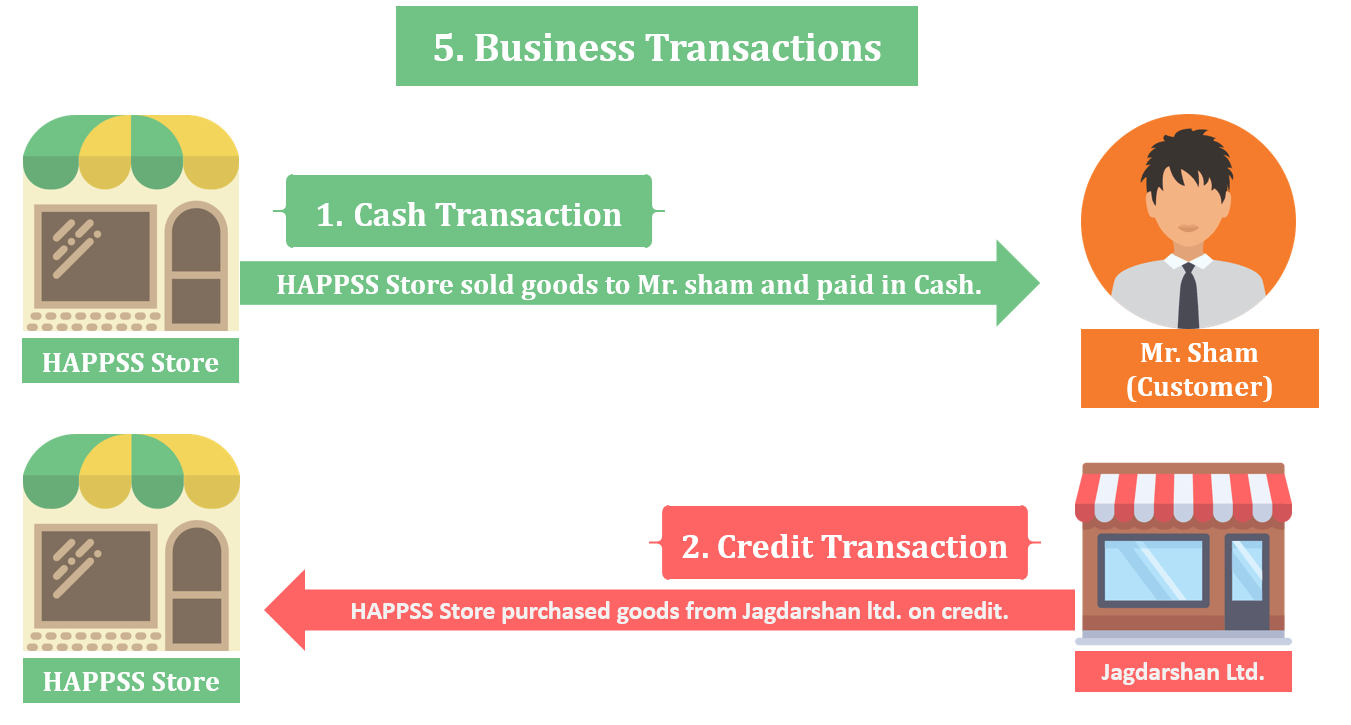
When one business does deal for goods and service in the form of in cash or credit with any other business or an Individual is called Business Transaction.
Business Transactions -Financial Accounting Terminology
Like: Purchase or sale of Assets, Payment made for expenses, Getting work done from Workers and paid wages to them.
6. Accounts
A record of financial transactions for an Asset, Individual, Organization, Expense or Income.
A transaction is recorded with debit and credit entries.
Like: -
Asset – Plant and Machine A/c, Building A/c, Land A/c, Debtors A/c, Cash A/c.
Meaning of Debit is adding an amount of cash or fund into the expenses or assets accounts and subtracting from the owner's equity, liabilities or income accounts. 'Debit' word comes from the Latin word debate which means to owe. The word Debit is also abbreviated as "Dr." It is always operated opposite to the Credit. It is always shown on the left side of the ledger accounts.
Meaning of Credit is adding an amount of cash or fund into the owner's equity, liabilities or income accounts and subtracting from the expenses or assets accounts. The word Credit is also abbreviated as "Cr." It is always operated opposite to the Debit. It is always shown on the Right Side of the ledger accounts.
9. Goods
Those items are purchased by Businesses only for sale (not for the use or to consume) and in other words, those items from which other items will produce.
Like: -
A car painter buys wood to make furniture or Fixture.
A Shop-Keeper buy products to sell it out to consumer (End User)
When Business sell only goods is Sale.
When selling any other assets then it is not a Sale.
12. Purchase Return / Return outwards
where Business received goods not according to sample, then these are returned to the vendor/supplier is known as purchase return.
Subscribe to our Youtube Channel
13. Sale Return / Return Inwards
When Customer/consumer returned goods to us is called sale return/return inwards.
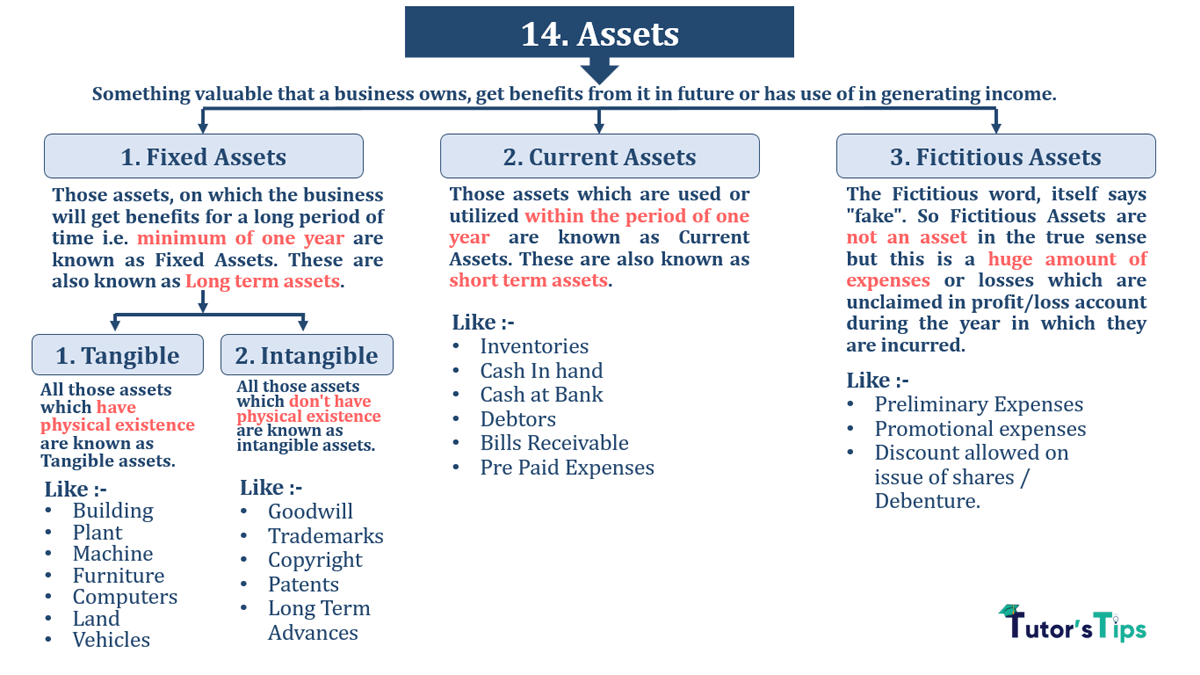
Something valuable on which the business has ownership, get benefits from these items in future or have used in generating incomes. These items are known as assets. As further explained in the following diagram.
Assets and their types with examples
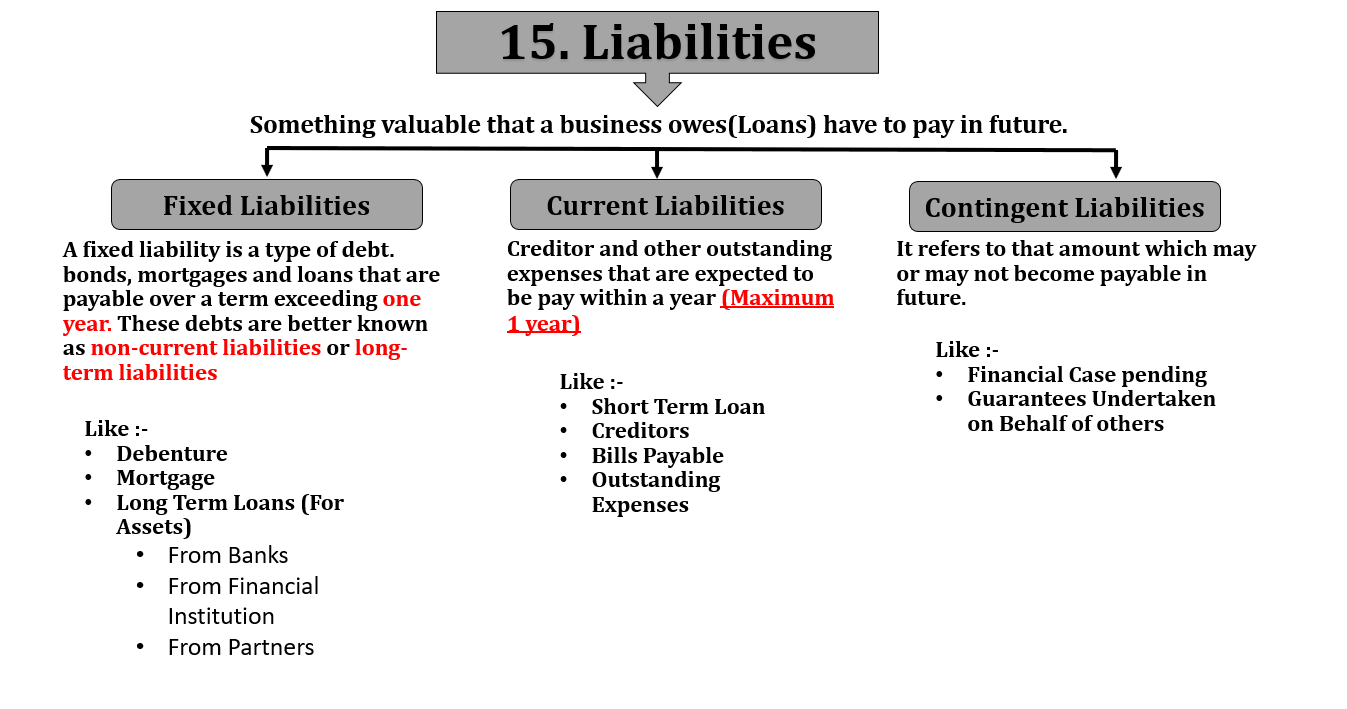
Something valuable that a business owes(Loans), which business have to pay in future. These are known as liabilities. As further explained in the following diagram.
Liabilities Charts-Financial Accounting Terminology
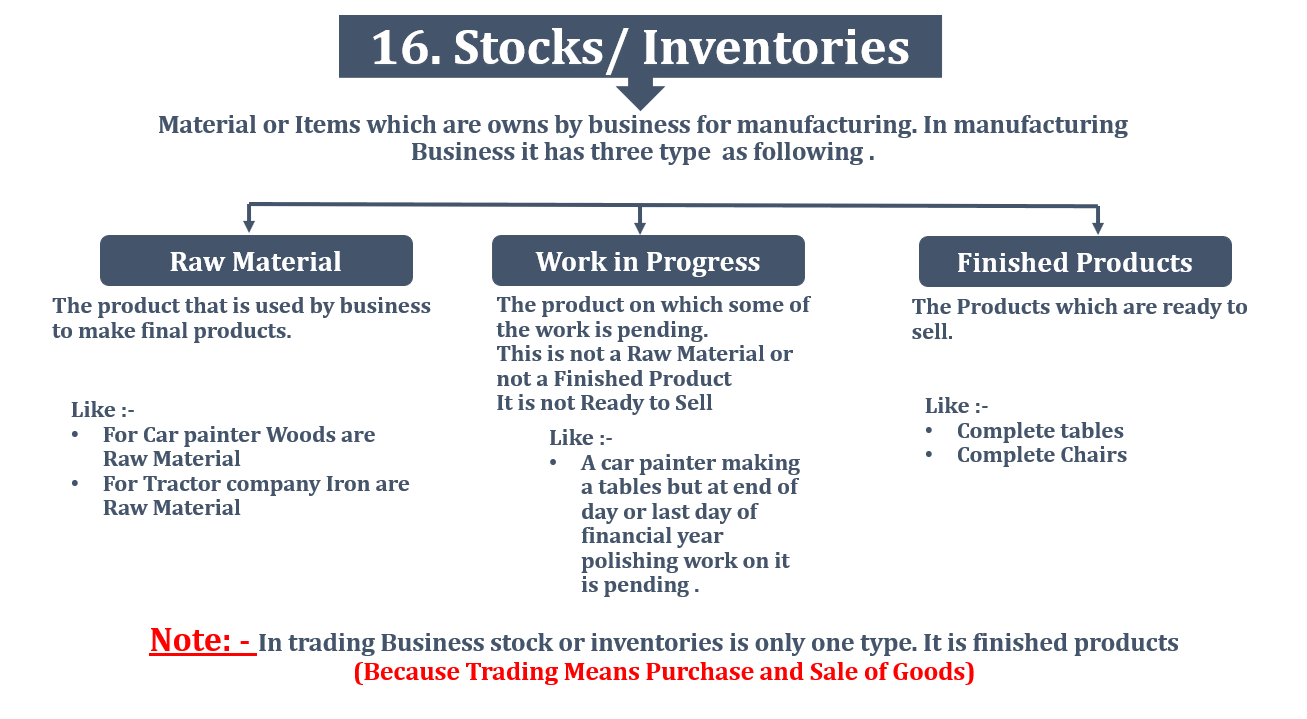
Material or Items which are owns by the business for manufacturing. In manufacturing Business, it has three types of following.
Inventories or Stock -Financial Accounting Terminology
That amount that has been paid by the business to produce finished products is known as the cost of goods sold(COGS)
1. In trading: -
That amount of expenses which has been spent by the business from the process of purchase till the sale is known as the cost of goods sold(COGS). It includes the purchase price of goods and all expenses incurred to make to sell.
Subscribe our Youtube Channel
That amount which has spent or will be spent on goods and services is known as Expenditure. These are two types which are explained given below: -
1. Revenue Expenditure
It is the amount which already spent or due but not spent (Liability) on goods and services which are consumed within the current period. (It Means 1 Financial Year i.e. 01/04/__ to 31/03/__ ).
Like: - Paid Salary/Wages to Employer in C/Y, Rent of Office for C/Y, Commission on Sale For C/Y, all expenses have come under this.
2. Capital Expenditure
It is the amount which already spent or due but not spent (Liability) on goods and services which are/will be used and gets benefit from it in the current year and in future years also.
Like: - Spent to purchase a new Land and Building. Purchase and Creation of All assets and Come under this.
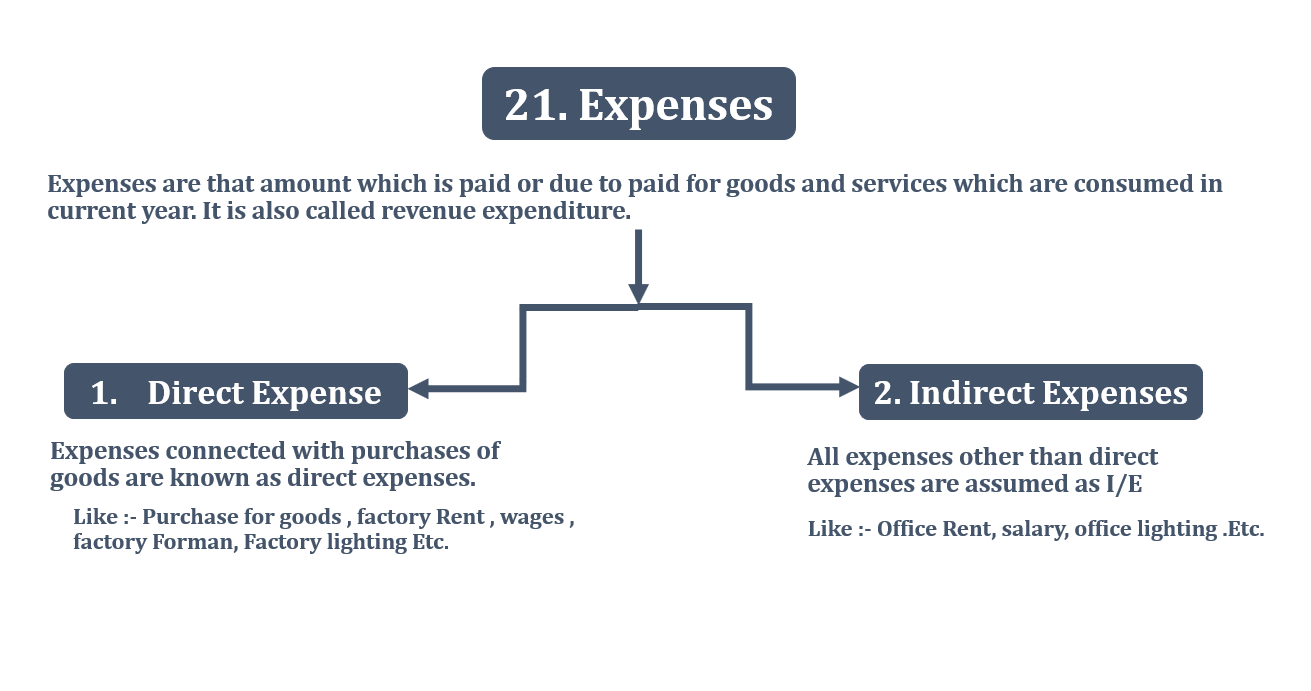
Expenses are that amount which is paid or due to paid for goods and services which are consumed in the current year. It is also called revenue expenditure. These are two types as explained in the following diagram: -
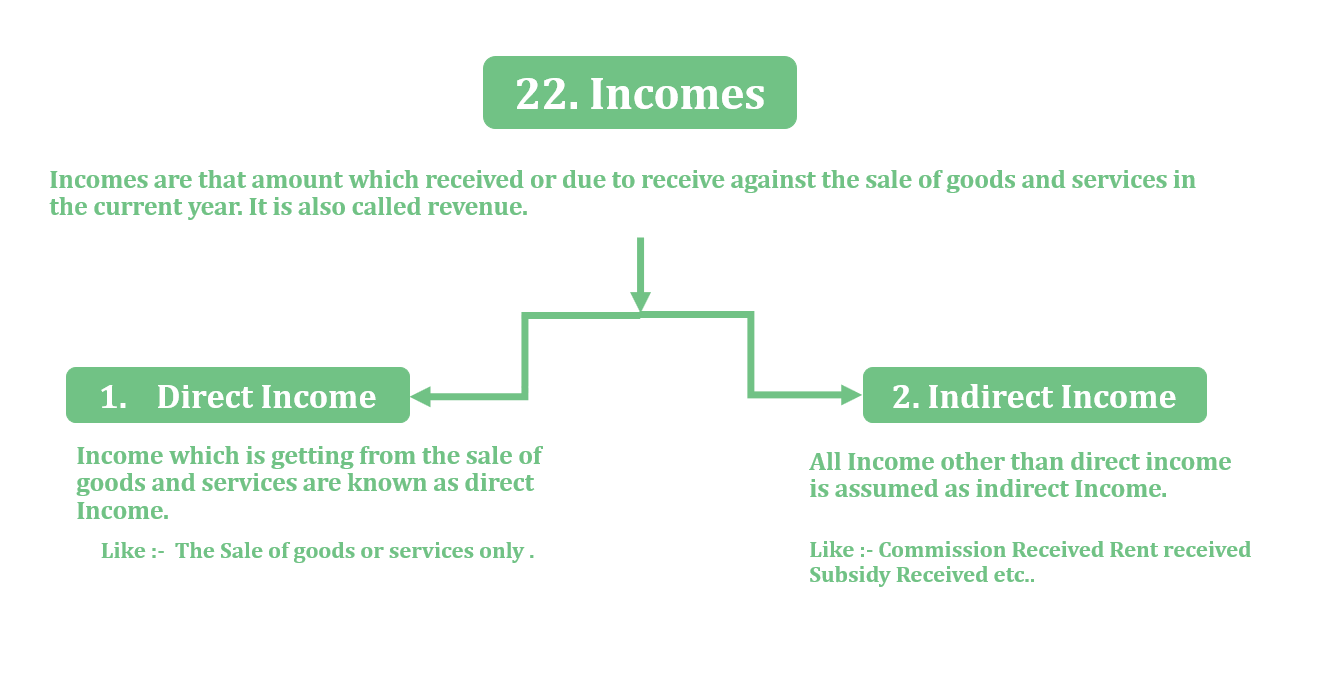
Incomes are that amount which received or due to receive for the sale of goods and services in the current year and also called revenue. These are two types as explained in the following diagram: -
23. Revenues
Revenue is the income that a business has from its normal business activities, usually from the sale of goods and services to customers Means Direct Income.
24. Profit
When at the end of the financial year, the Business gets to save some amount after adjusting all expenses with total revenue of the business, that amount is known as income. These are two types: -
When there is an excess of Total incomes over total expenses is known as Net profit.
25. Loss
When at the end of the financial year, there is an excess of Expenses over income then that excess amount is known as loss. These are two types: -
1. Gross Loss
When there is an excess of Direct expenses over Direct incomes is known as Gross loss.
2. Net Loss
When there is the excess of total expenses over total incomes is known as a nett loss.
26. Gain
Business gets to profit from the sale of old assets it is called gain.
27. Discount
when the Business has purchased or sold the goods at a price less than the actual price is known as a discount. In other words, The difference between the actual price and sale price is called the discount. These are of two types, which are explained as follows: -
1. Trade Discount
Discount giving or getting at the time of sale or purchase is called a trade discount. This will not be shown in books.
2. Cash Discount
Discount giving or getting at the time of payment is called a cash discount. This will be shown in books.
If you have any question about Financial Accounting Terminology please ask it in the comment section below.Thanks
Check out Financial Accounting Books@ Amazon
👤
Author & Educator
Sarbjit SinghB.Com and M.Com
Accounting & Commerce Educator
Sarbjit Singh holds a B.Com and M.Com degree and has over 12 years of teaching experience in double entry bookkeeping, financial accounting, and business studies.
❓ Frequently Asked Questions
What is the main topic of "Financial Accounting Terminology"?
This guide covers "Financial Accounting Terminology", focusing on key definitions, step-by-step concepts, applications, and revision guidelines relevant to Financial Accounting.
Who can benefit from this guide on "Financial Accounting Terminology"?
It is primarily curated for Class 11 and Class 12 high school commerce, accounting, and economics students, as well as aspirants preparing for board exams or CA Foundation.
Where can I practice questions related to "Financial Accounting Terminology"?
You can take our custom-built interactive practice quiz directly on this page to test your understanding of "Financial Accounting Terminology" instantly.
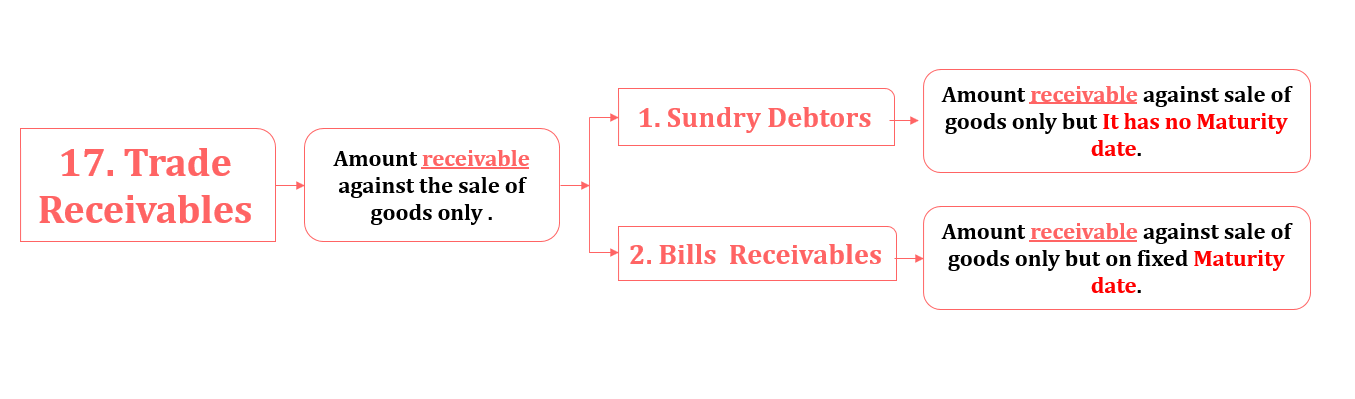
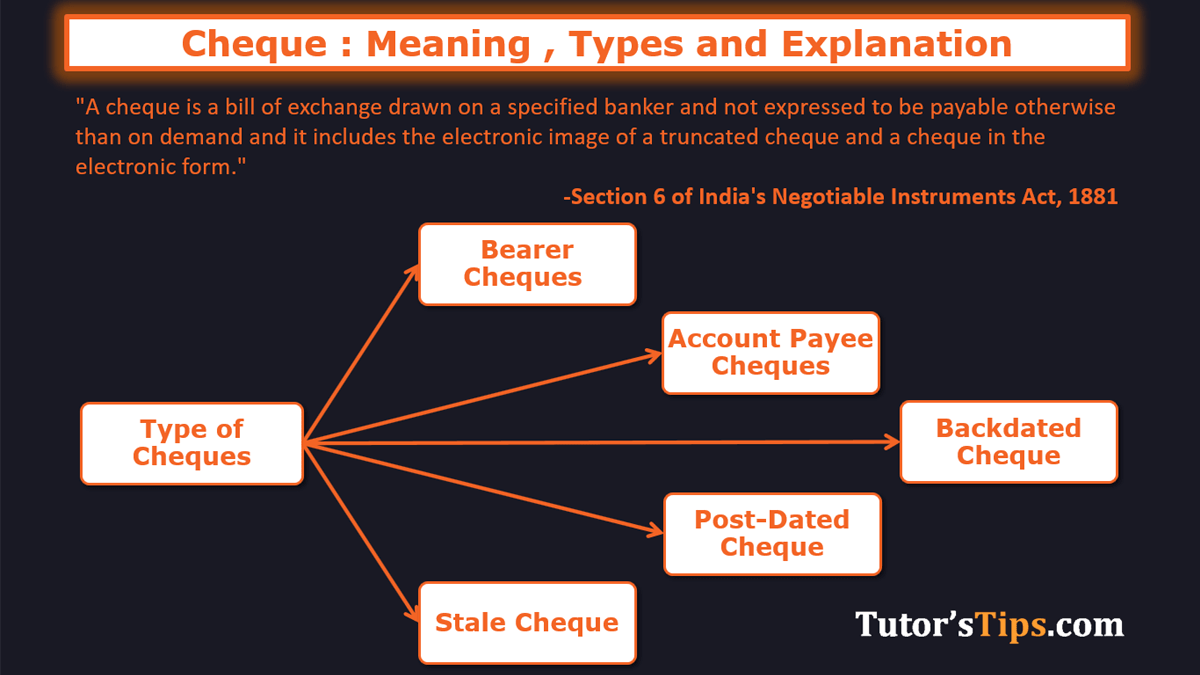
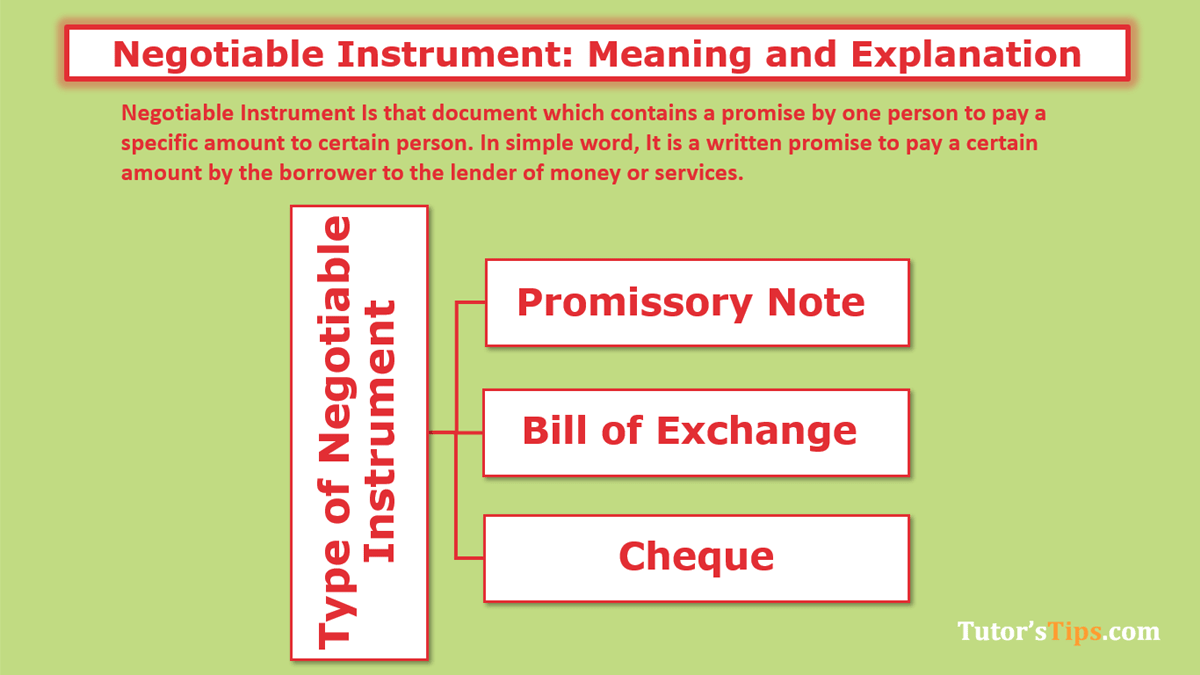
PDC Receivable means Post Date cheque receivable. The business has a cheque but the date of the cheque is for the next period. you can't deposit it into you bank account.