Loading Tutorstips...
We have explained the whole topic of the ledger in the following parts to understand to proper meaning and utilization of it in financial accounting.
Ledger is a book in which we record all business transactions of each and every account in a separate ledger account. In other words, It is the summary of the single account. So we have to create a separate ledger for each and every account which are already created while recording journal entries.
These accounts are maintained in alphabetical order. With the help of the ledger accounts, we can get whole information about any particular account because all the related journal entries to the particular account are posted on the continuous pages of this book.
In the ledger accounts, we have to record date wise transactions related to a particular account, but in the journal, all the transactions are recorded only date wise and the name of the account has ignored. So if we want to know the balance of a particular account then it is very difficult to get it from Journal because we have to check and find out all transactions related to the particular accounts from all pages of the journal daybook.
Ledger accounts also have opening and closing balances but the journal doesn't have.
https://tutorstips.com/difference-between-journal-and-ledger/
The examples of ledger accounts are shown as follows:
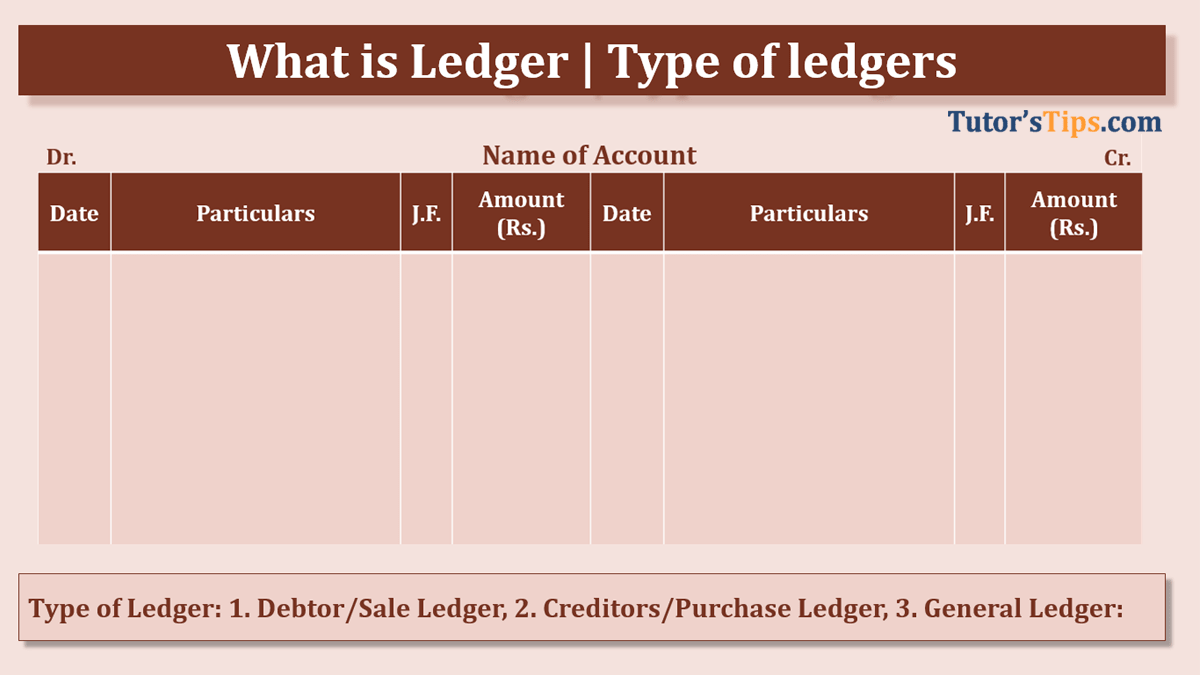
It has three types shown as following:
It has two sides, the left side is the debit side and the right side is the credit side. the format is shown as under :
| Dr. |
Name of Account | Cr. |
|||||
| Date | Particulars | J.F. | Amount | Date | Particulars | J.F. | Amount |
|---|---|---|---|---|---|---|---|
This format is now used more than the old one. In this format, Date, particulars and journal folio make common for both transactions debit or credit. Almost in all the accounting software, this format is used. it is shown below:
| Name of Account | |||||
| Date | Particulars | J.F. | Debit | Credit |
Balance |
|---|---|---|---|---|---|
Posting means recording the transaction in the ledger from the journal or other subsidiary books. First of all, every transaction recorded in the journal or cash book or purchase book or sale book or returns books and then it will post in the ledger. In the posting, we use the prefix on both the side "To" on the debit side and "By" on The credit side.
We will explain it to you in steps as shown below:
| 01/04/2018 | Cash a/c | Dr. | 10,00,000 | ||
| To capital a/c |
10,00,000 |
||||
| (Being capital introduced by owner) | |||||
Here we had operated two accounts
So, in cash a/c, we have to post the capital a/c
and in the capital a/c, we have to post the cash a/c as shown below:
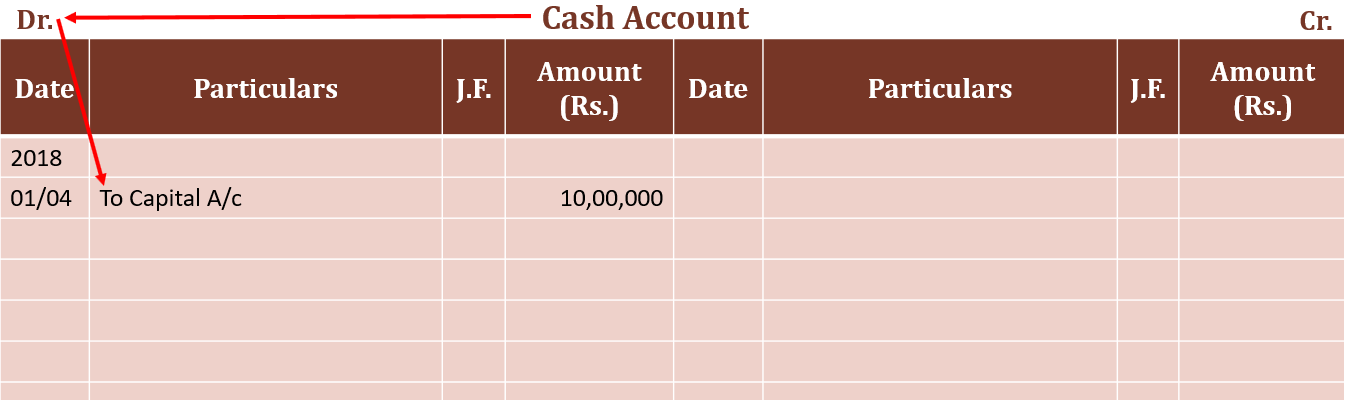
This image shows the exact journal entry. Please read according to the direction of the arrows.
it shows cash a/c ---->Dr --->To capital a/c.
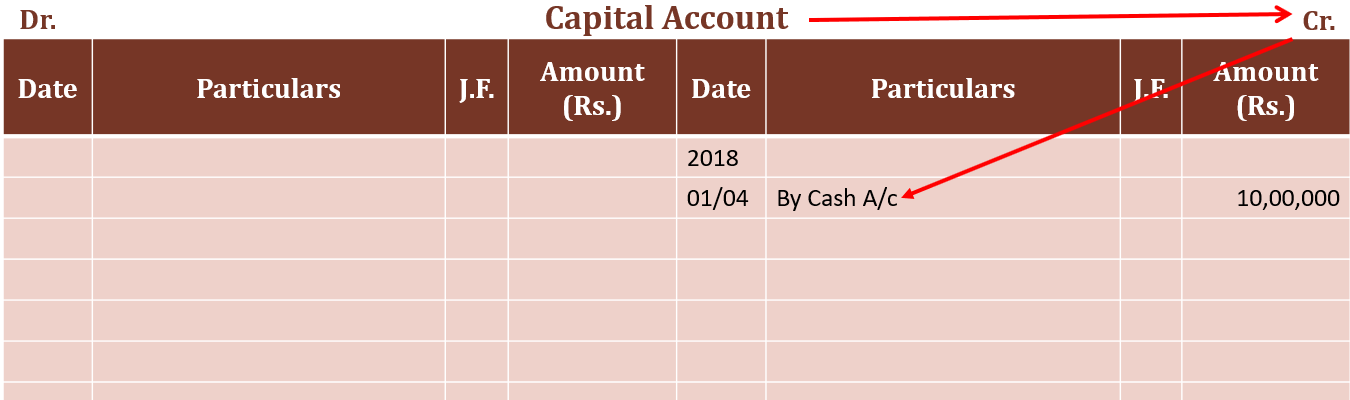
In this image, it shows also the journal entry. Please read according to the direction of the arrows.
it shows capital a/c ---->Cr. --->By Cash a/c.
This is the reason to use the prefix "To" on the Debit side " & "By" on the Credit side" because it makes sense.
we had already explained the meaning of compound journal entry if you did not remember then please click here. I will take the same example of the previous topic of the compound journal entry for easy understanding.
Example 1:
On Date 01/08/2017 Sold goods to Mr Rajan worth Rs. 40,000/- and He paid Rs. 5,000/- in cash and 35,000/- By cheque.
In this above transaction three accounts are involved shown as below:
| Date | Particulars | L.F. | Debit | Credit | ||
|---|---|---|---|---|---|---|
| 01/08/2017 | Cash a/c | Dr. | 5,000 | |||
| Bank a/c | Dr. | 35,000 | ||||
| To Sales a/c | 40,000 | |||||
| (Being Sold goods to Mr Rajan worth Rs. 40,000/- and He paid Rs. 5,000/- in cash and 35,000/- By cheque) | ||||||
Post this transaction to the Ledger account as below:
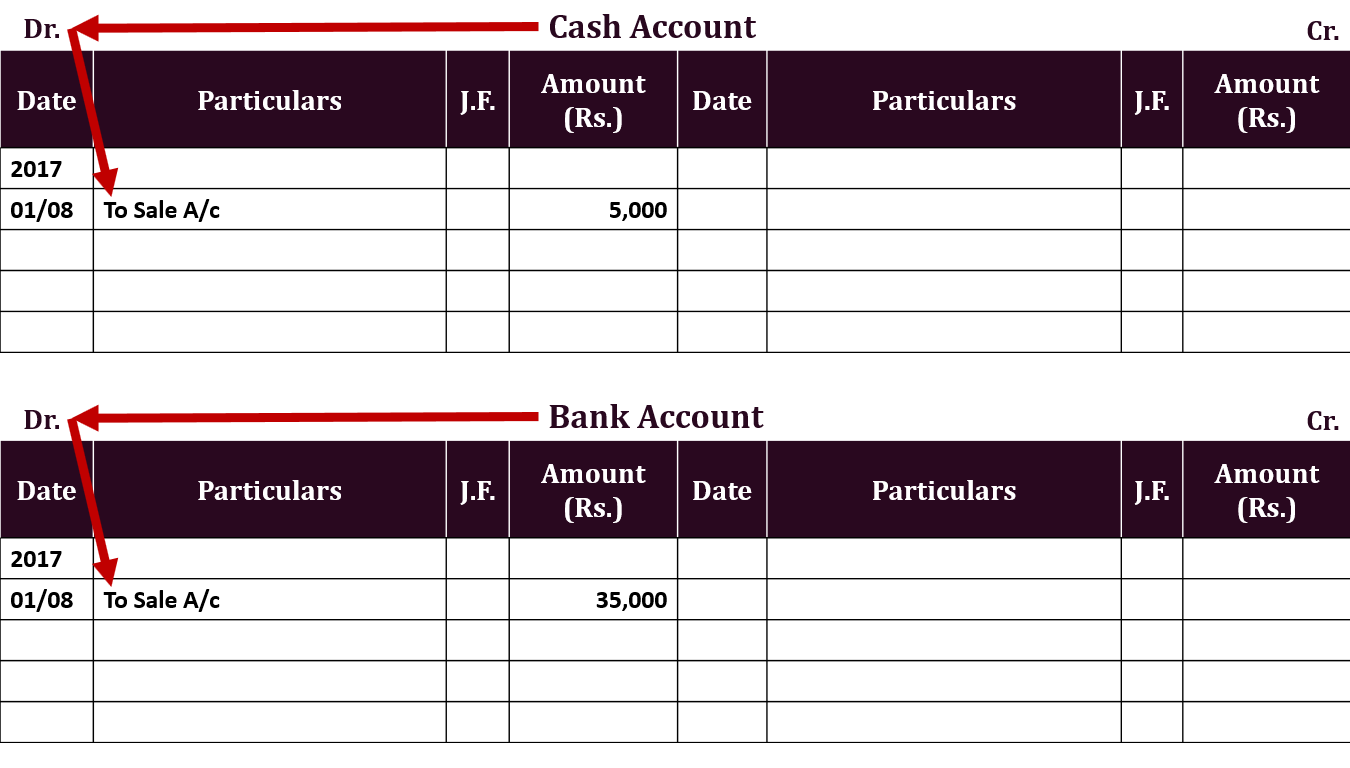
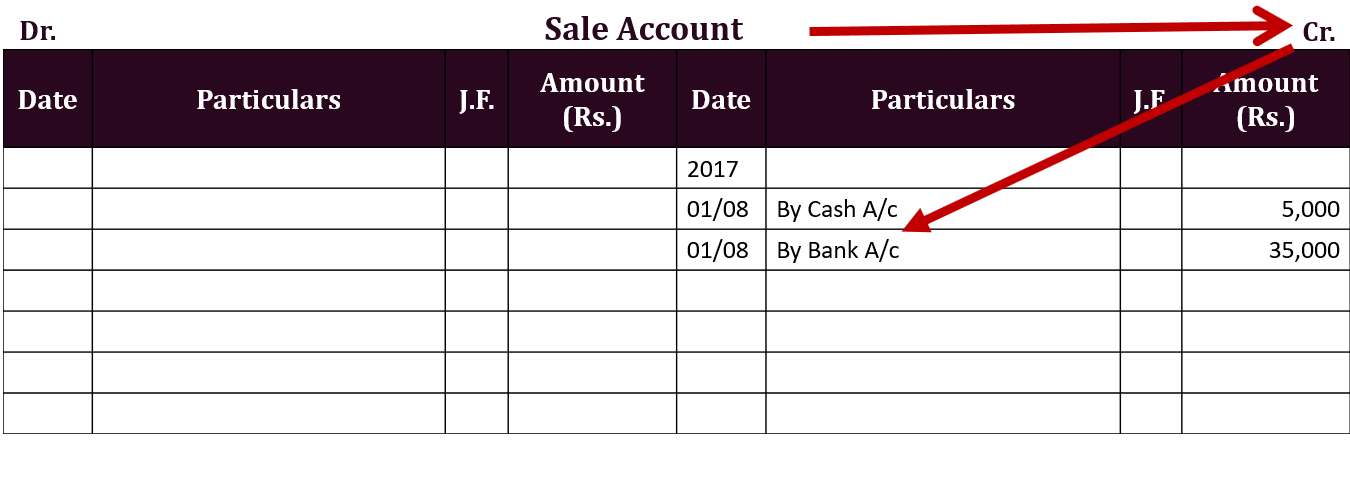
Compound Journal Entry posted to Ledger Example
Example 2:
On Date 01/08/2017 Purchase goods from Mr Rohan worth Rs. 30,000/- and paid him Rs. 5,000/- in cash and 25,000/- By cheque.
In this above transaction three accounts are involved shown as below:
| Date | Particulars | L.F. | Debit | Credit | ||
|---|---|---|---|---|---|---|
| 01/08/2017 | Purchase a/c | Dr. | 30,000 | |||
| To Cash a/c | 5,000 | |||||
| To Bank a/c | 25,000 | |||||
| (Being Purchase goods from Mr Rohan worth Rs. 30,000/- and paid him Rs. 5,000/- in cash and 25,000/- By cheque) | ||||||
Post this transaction to the Ledger account as below:
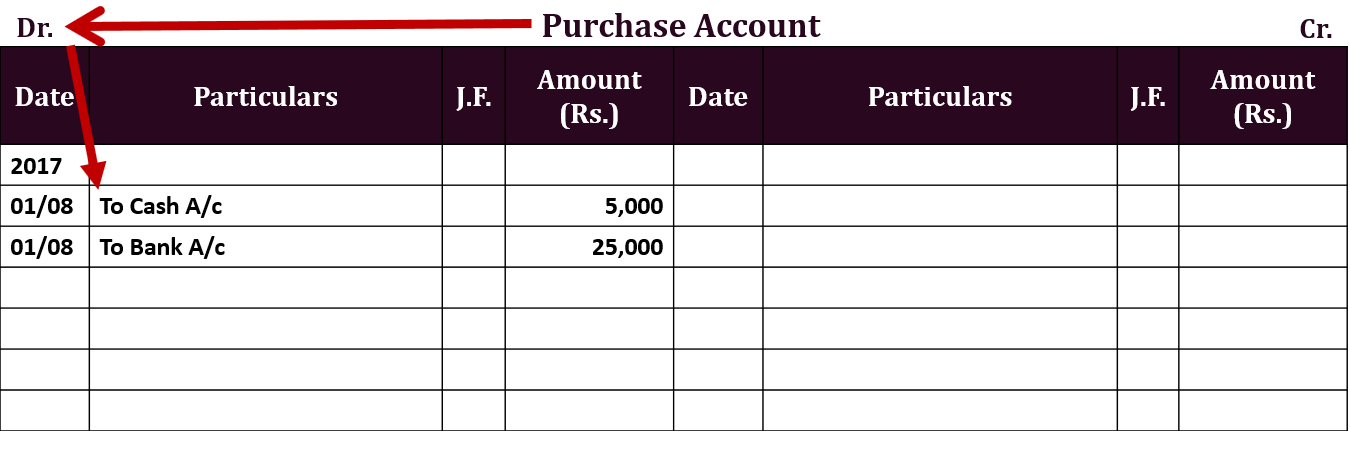
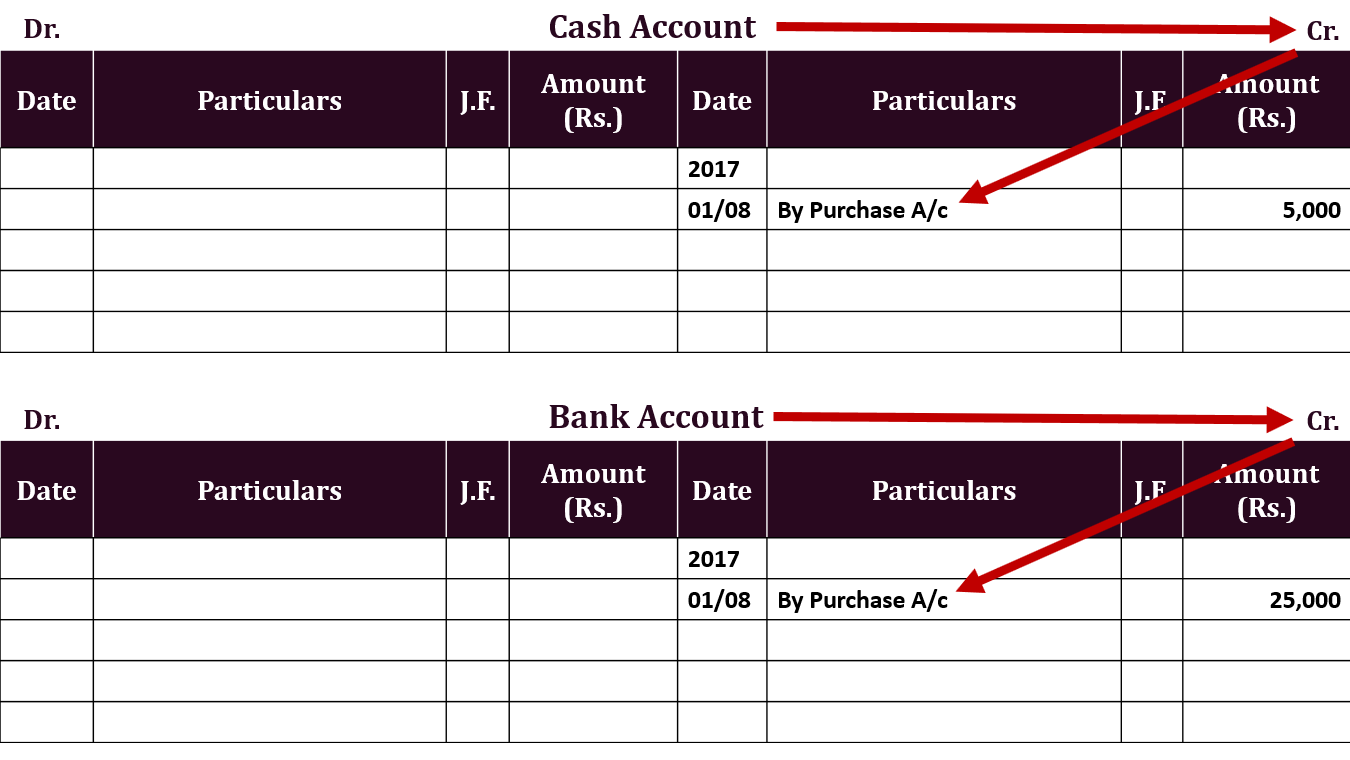
Compound Journal Entry
we had already explained the meaning of opening a journal entry if you did not remember then please click here.
We will take the same example of the previous topic on the compound journal entry for easy understanding.
Example no. 1
Balance sheet year ending 31/03/2017 shown the following balances post it to next financial year:
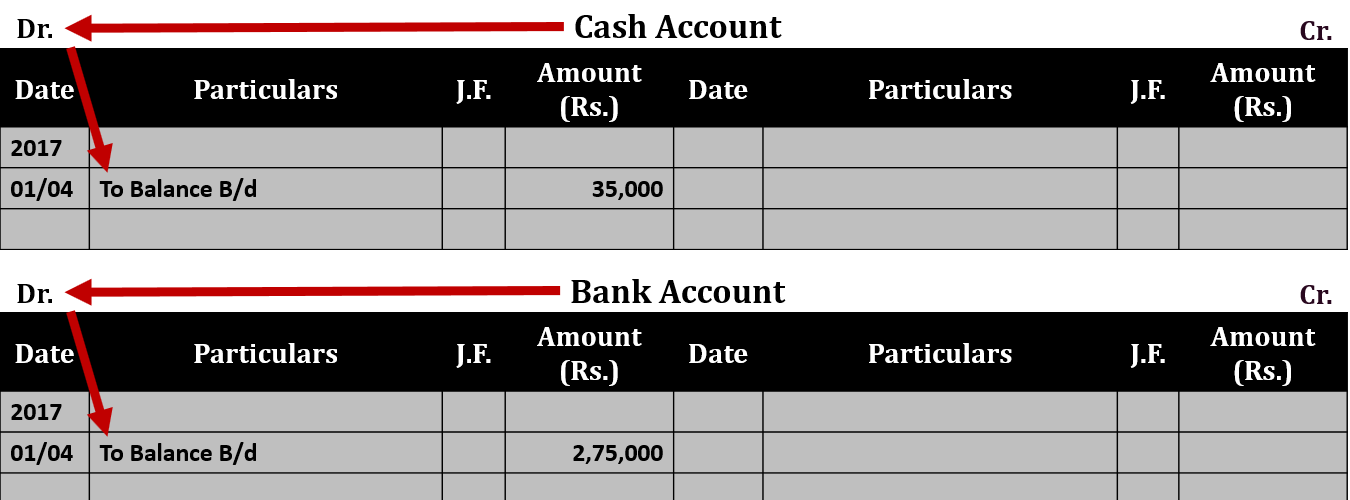
Closing Balances of Assets are
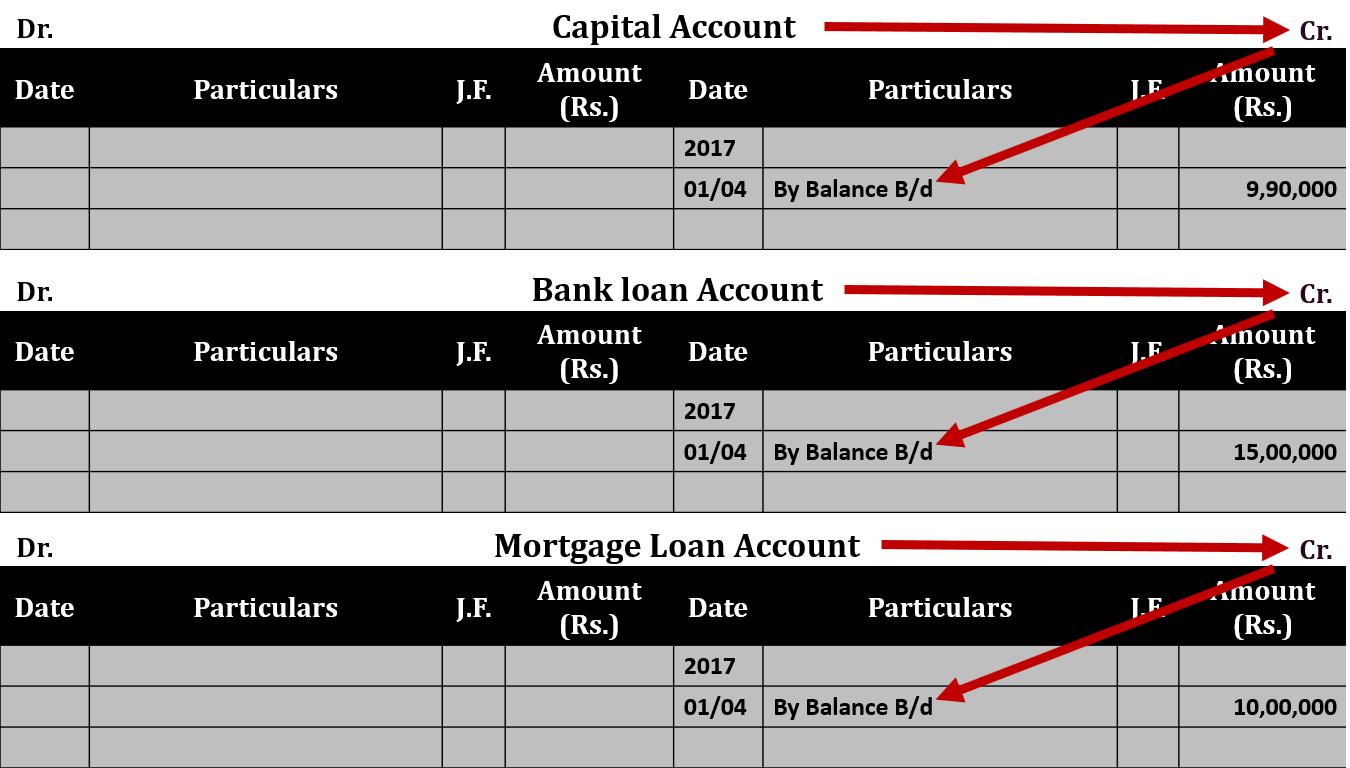
Closing Balances of Capital and liabilities are
Journal entry will be posted as shown below:
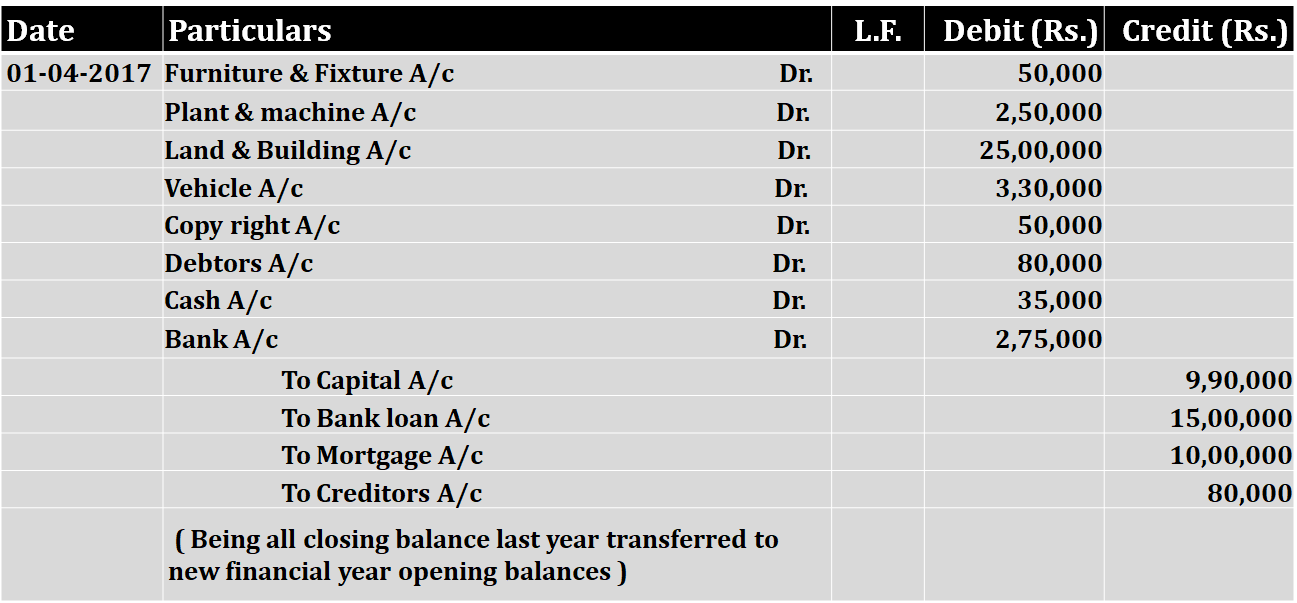
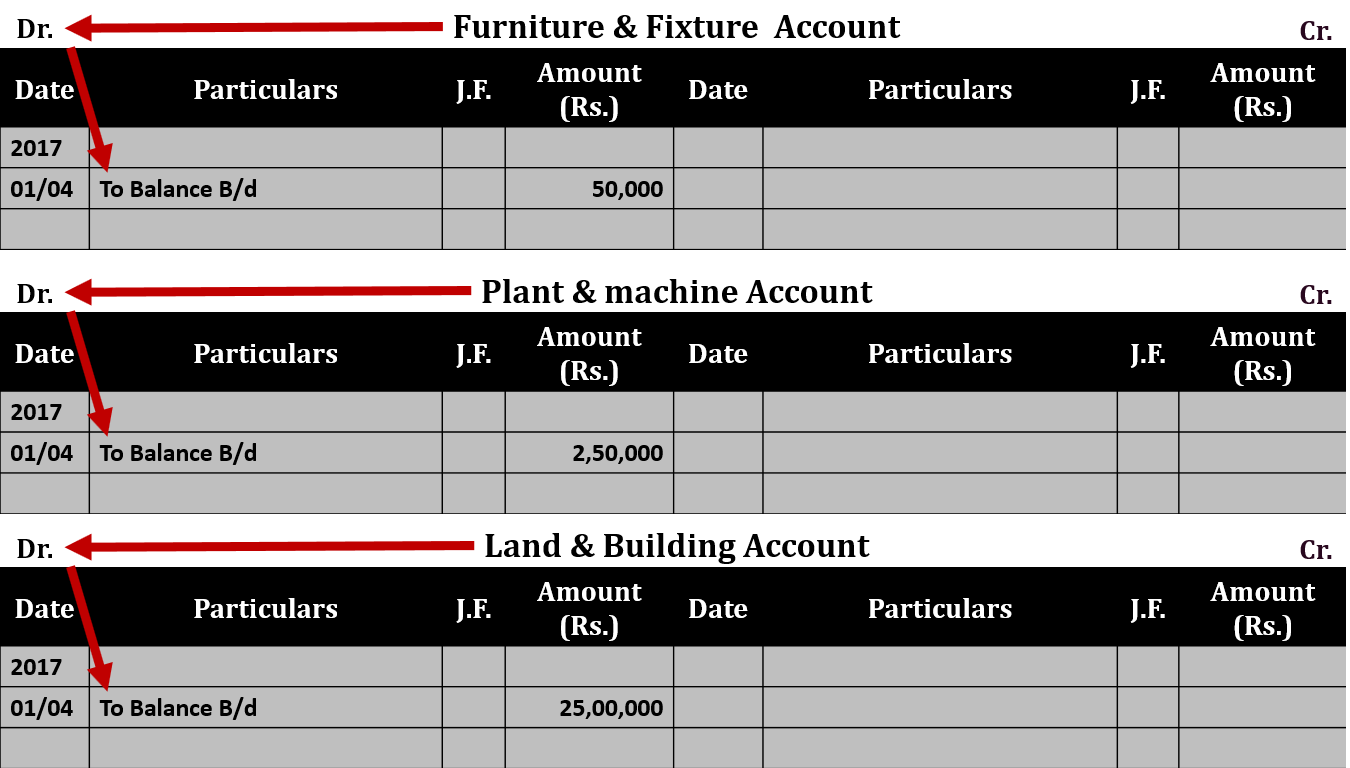
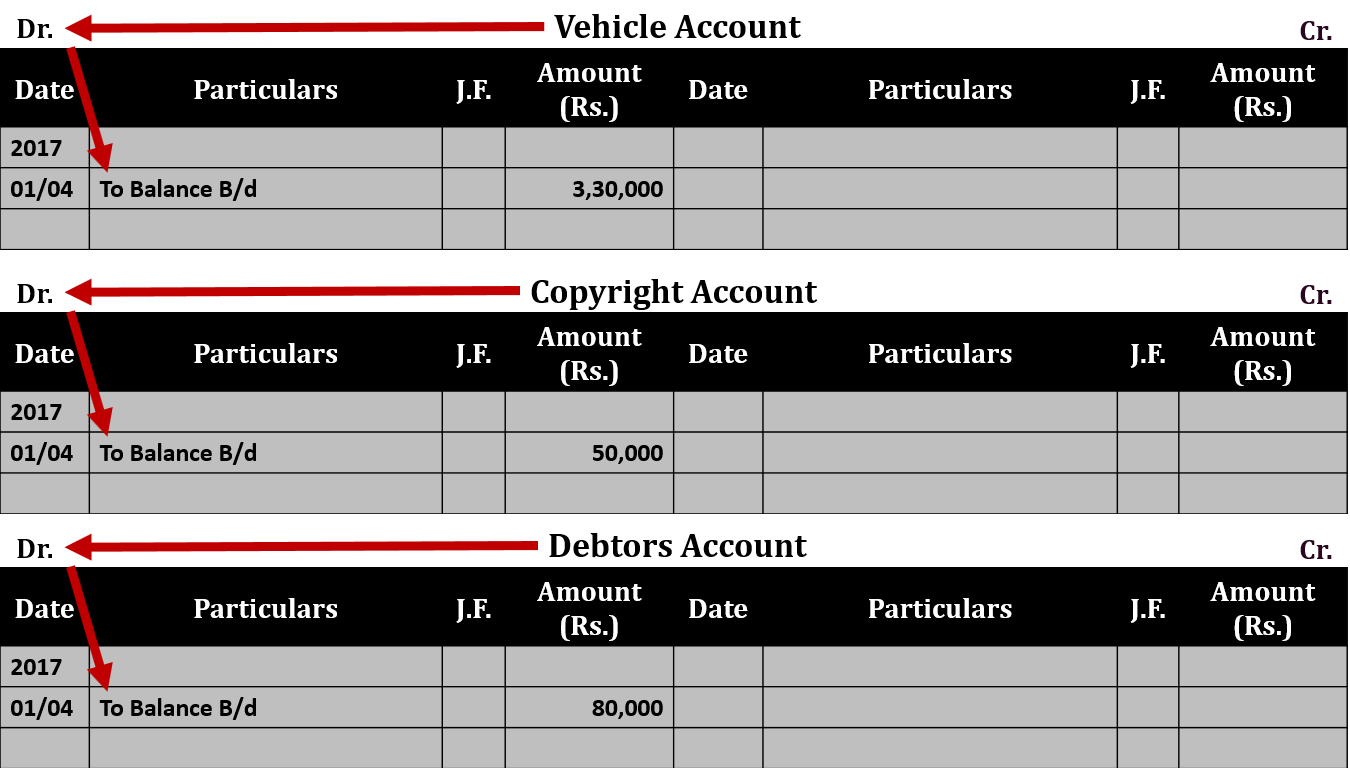
We have to open a total of 12 ledger accounts and Post this transaction to the Ledger account as below:

Accounting & Commerce Educator
Sarbjit Singh holds a B.Com and M.Com degree and has over 12 years of teaching experience in double entry bookkeeping, financial accounting, and business studies.
We have explained the whole topic of the ledger in the following parts to understand to proper meaning and utilization of it in financial accounting. What is…
Class 11 and Class 12 commerce students, and CA Foundation aspirants, studying Financial Accounting.
Yes — this page includes a short interactive quiz so you can check your understanding straight away.