Loading Tutorstips...
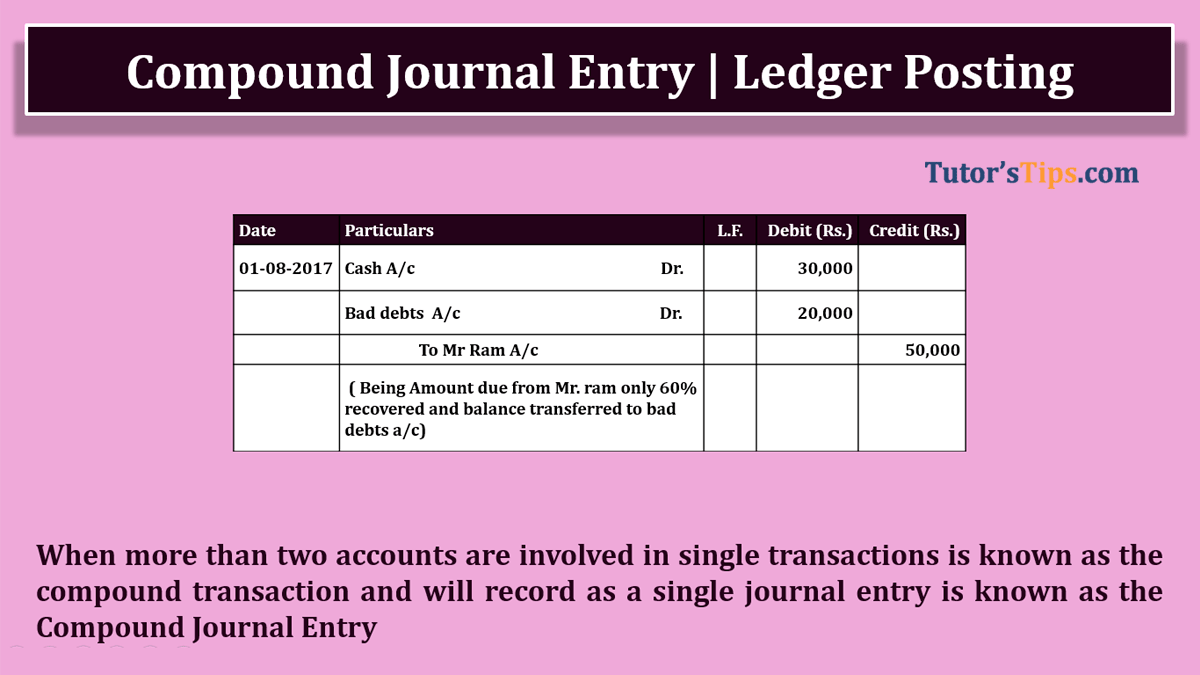
Where transaction related to three or more accounts is recorded in the books with the single journal entry is known as a compound journal entry.
In the transaction, Where two or more accounts of Debit or Credit are involved, which can be recorded in journal day books by posting single journal entry, that journal entry is known as the Compound Journal Entry. It is also known as a combine journal entry.
For example:
AB Co. purchased goods worth Rs. 50,000 and paid 30% amount in cash and the balance by cheque.
So, in the above transaction, there are three accounts involved these are shown as following:
The Purchase account will be debited and cash & bank account will be credited. So the accounting entry which will be posted in books includes two credited accounts. So that's why this journal entry will be known as a compound journal entry.
Subscribe our Youtube Channel
The accounting treatment of compound Journal Entries may be in two types shown as follow:
Treatment of journal entries shown step by step with the help of accounting rules are already explained in the previous articles. You can check them from the following link by clicking on the name:
Example 1:
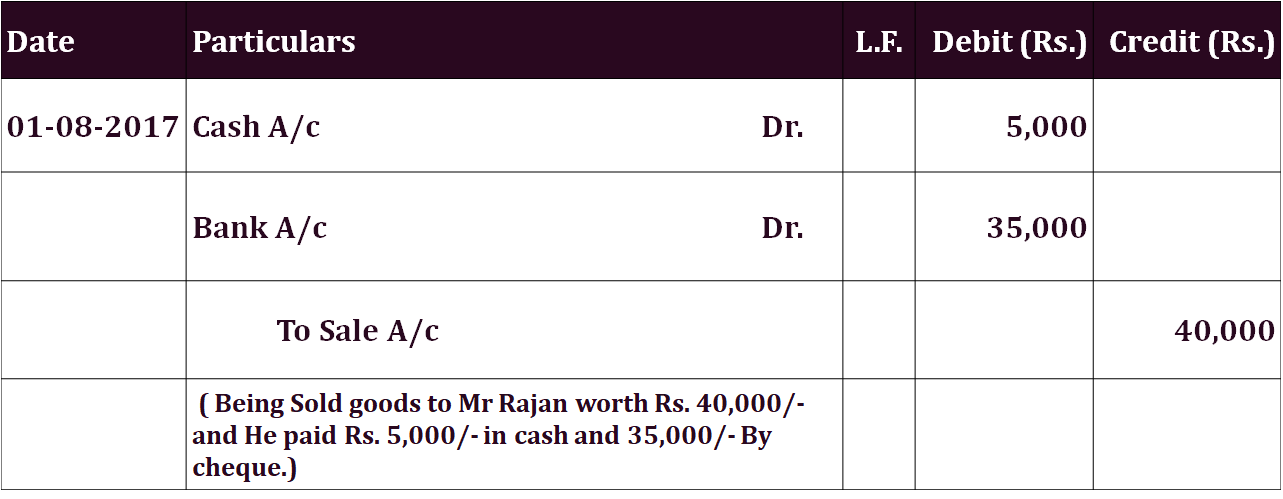
On Date 01/08/2017 Sold goods to Mr Rajan worth Rs. 40,000/- and He paid Rs. 5,000/- in cash and 35,000/- By cheque.
In this above transaction three accounts are involved shown as below:
Example 2:
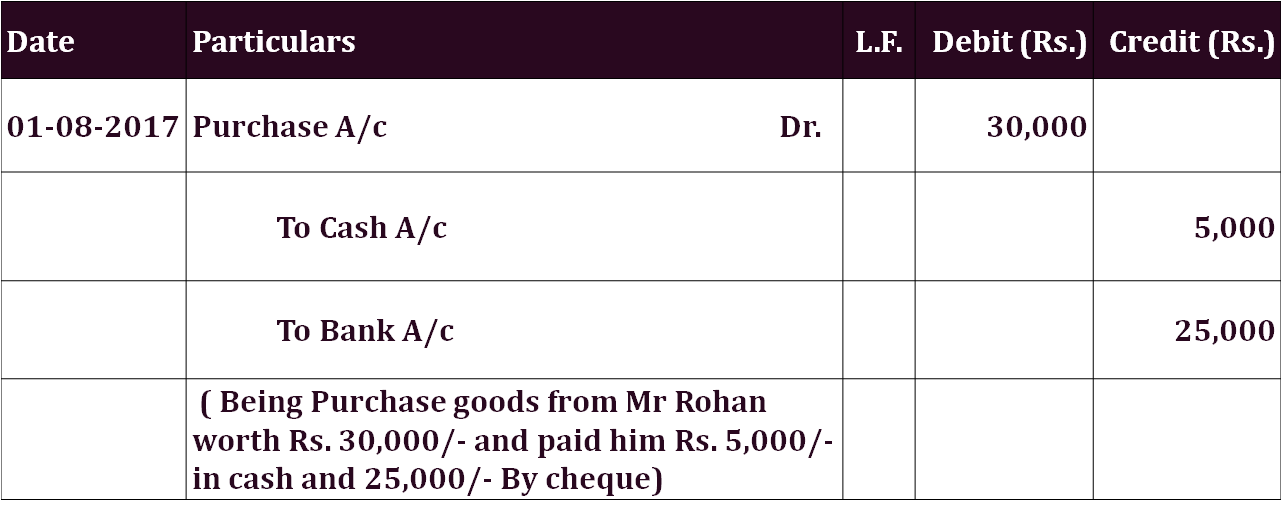
On Date 01/08/2017 Purchase goods from Mr Rohan worth Rs. 30,000/- and paid him Rs. 5,000/- in cash and 25,000/- By cheque.
In this above transaction three accounts are involved shown as below:
You can Comment the answer in the comment box of the following question, I will check and reply to you as soon as possible.
Thanks for reading the topic
Accounting & Commerce Educator
Sarbjit Singh holds a B.Com and M.Com degree and has over 12 years of teaching experience in double entry bookkeeping, financial accounting, and business studies.
Where transaction related to three or more accounts is recorded in the books with the single journal entry is known as a compound journal entry. What is…
Class 11 and Class 12 commerce students, and CA Foundation aspirants, studying Financial Accounting.
Yes — this page includes a short interactive quiz so you can check your understanding straight away.
20 February 2022
21 February 2022