Focus Topic:Implementation of GST and Act of GST | with Example
Estimated Reading Time:4 mins
Comprehensive academic guide covering core concepts of Implementation of GST and Act of GST | with Example.
Syllabus-aligned study material with detailed definitions, formats, and practical examples.
Interactive check: Includes a custom practice quiz at the bottom of the article to self-evaluate knowledge.
Implementation of GST was very difficult because it will subsume multiple indirect taxes and will have to apply the whole new Indirect Tax structure nationwide. It levied at every stage of where someone makes an addition to the value of goods. This Taxation system has multi-stage and will collect where its final consumption made.
Multiple stages: - GST is a multi-stage taxation system because it applies to all the level of goods life cycle.
From Manufacturer to End-users
Final consumption tax: - Because of single tax applicable form manufactured to end-user the tax will collect from where actual goods were consumed.
The idea of GST was first mooted in India by Kelkar committee in the year 2004 but idea not implemented because of some political difference.
But after more than a decade, Implementation of GSTSuccessfully done by govt on 01/July/2017.
For this relevant Bills passed by Lok-Sabha and Rajya Sabha
Following bills have passed by Lok Sabha on 29/03/2017 and By Rajya Sabha on 5/4/17
The Central Goods and Services Tax (CGST) Bill, 2017
The Integrated Goods and Services Tax (IGST) Bill, 2017
The Union Territory Goods and Services Tax (UTGST) Bill, 2017
The Goods and Services Tax (Compensation to States) Bill, 2017
The State Goods and Services Tax (SGST) Bill, 2017(Each State will introduce its own)
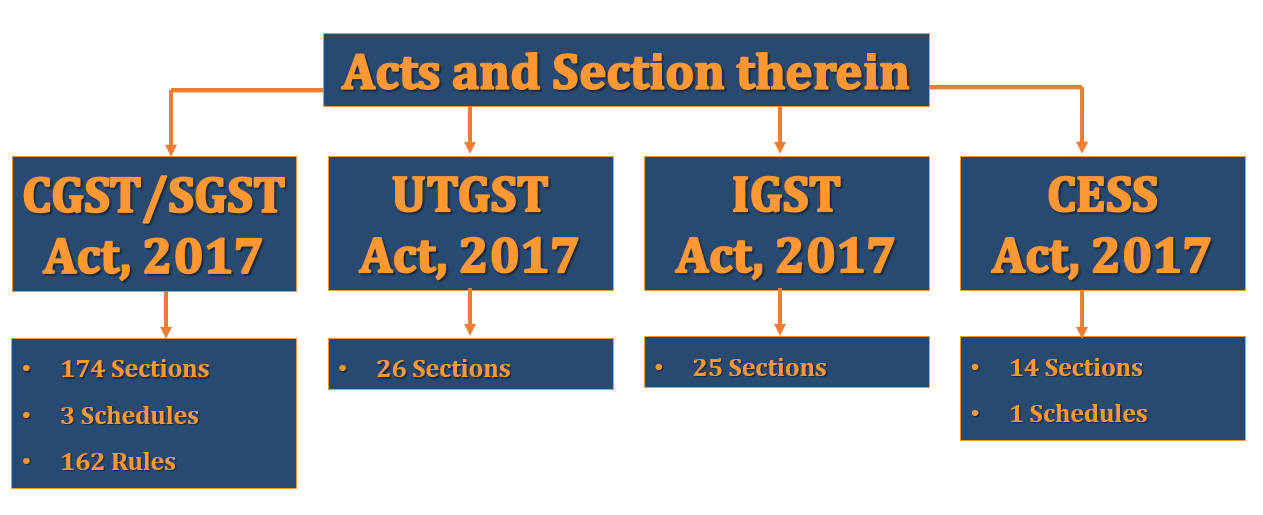
For the Relevant Following Act was made under GST
CGST Act, 2017
IGST Act, 2017
UTGST Act, 2017
SGST Act, 2017
CESS Act, 2017
Explanation of all GST acts and all sections therein
Explanation: -
CGST – Central Goods and Services Tax
SGST – State Goods and Services Tax
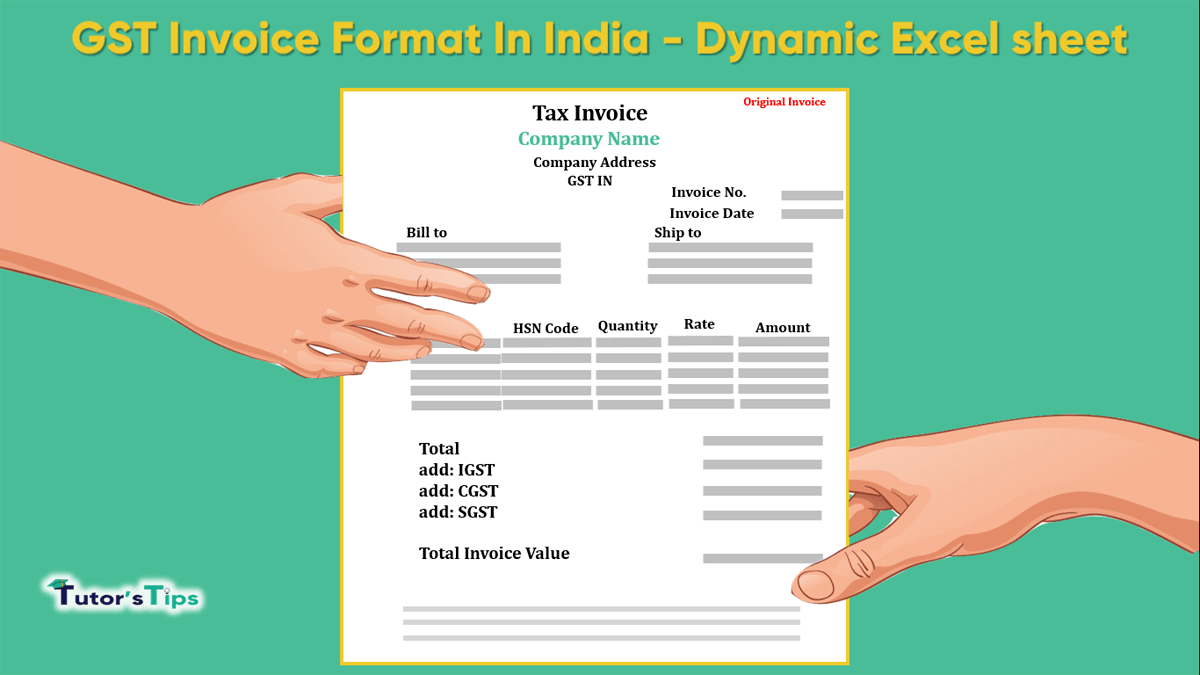
IGST – Integrated Goods and Services Tax
UTGST – Union Territory Goods and Services Tax
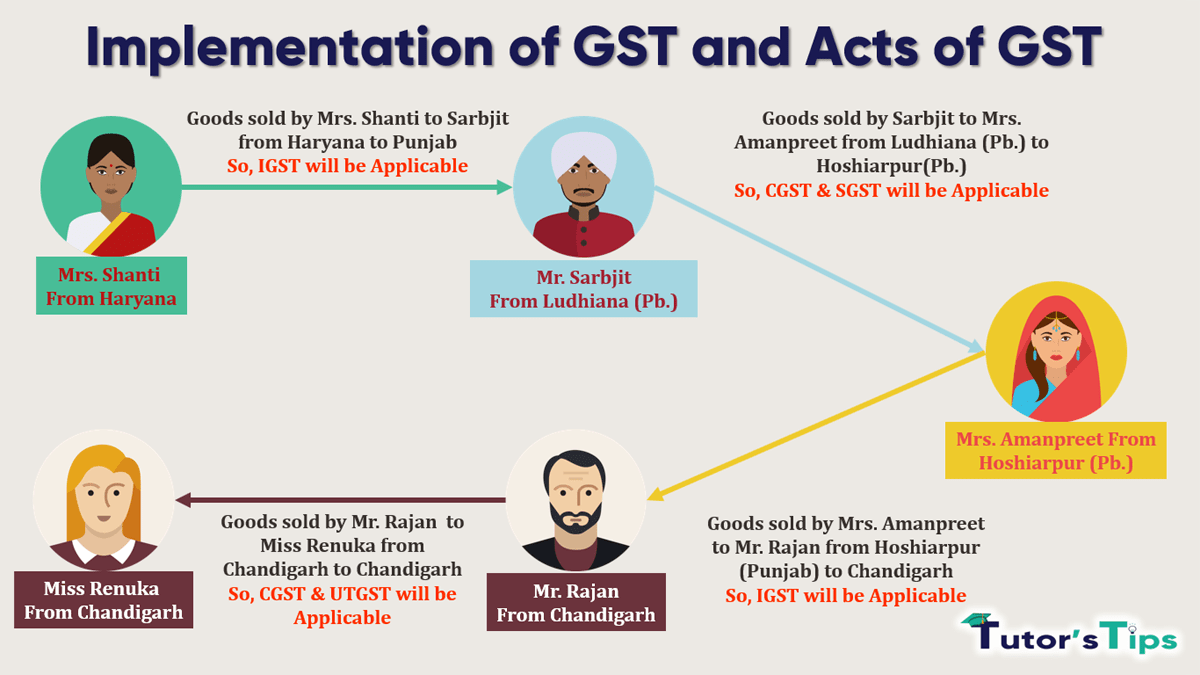
We will explain all these terms with a single example as follows:-
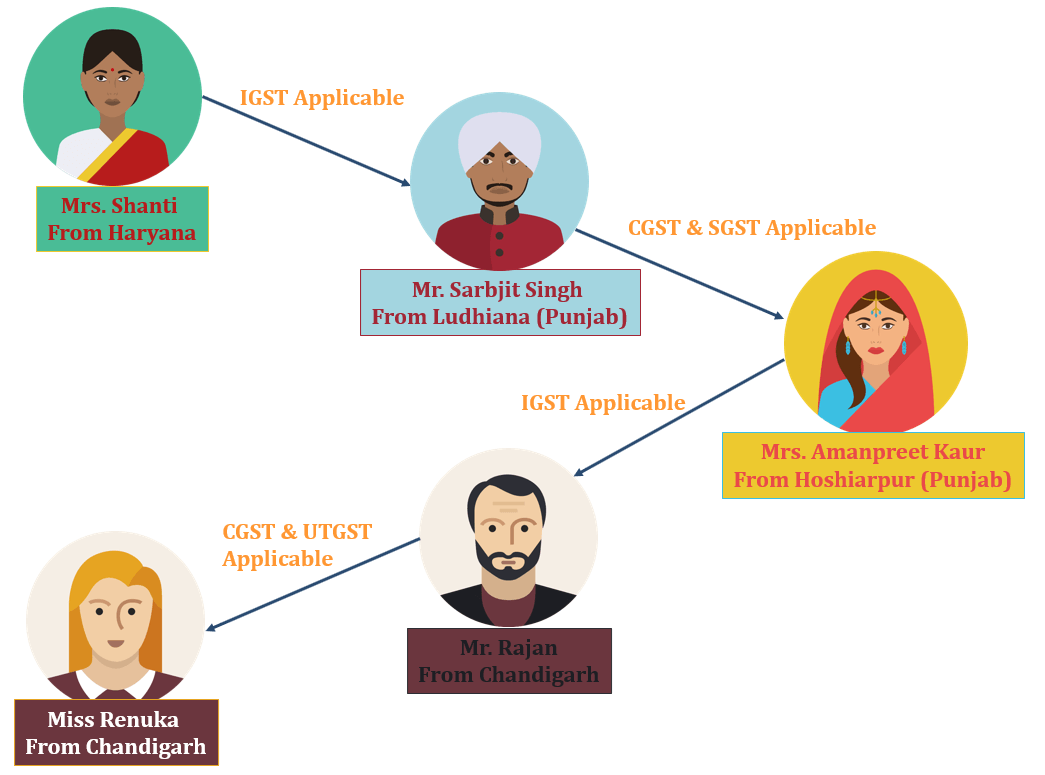
the process of GST applicable
According to Image: -
Shanti from Haryana sold goods to Mr Sarbjit Singh from Ludhiana (Punjab) this type of sale called inter-state sale (Sale outside the State) and on that type of sale IGST will be charged (Rates applicable as per Goods)
On next stage, Sarbjit Singh from Ludhiana (Punjab) sold goods to Mrs Amanpreet Kaur from Hoshiarpur (Punjab) this type of sale called intra-state sale (Sale within the State) and on that type of sale CGST and SGST both will be charged (Rates applicable as per Goods)
On next stage, Amanpreet Kaur from Hoshiarpur (Punjab) sold goods to Mr Rajan from Chandigarh(UT), this type of also sale called inter-state sale (Sale outside the State) and on that type of sale IGST will be charged (Rates applicable as per Goods).
On next stage, Mr Rajan from Chandigarh(UT) sold goods to Mrs Renuka from Chandigarh, this type of sale called intra-state sale (Sale within the UT) and on that type of sale CGST and UTGST both will be charged (Rates applicable as per Goods)
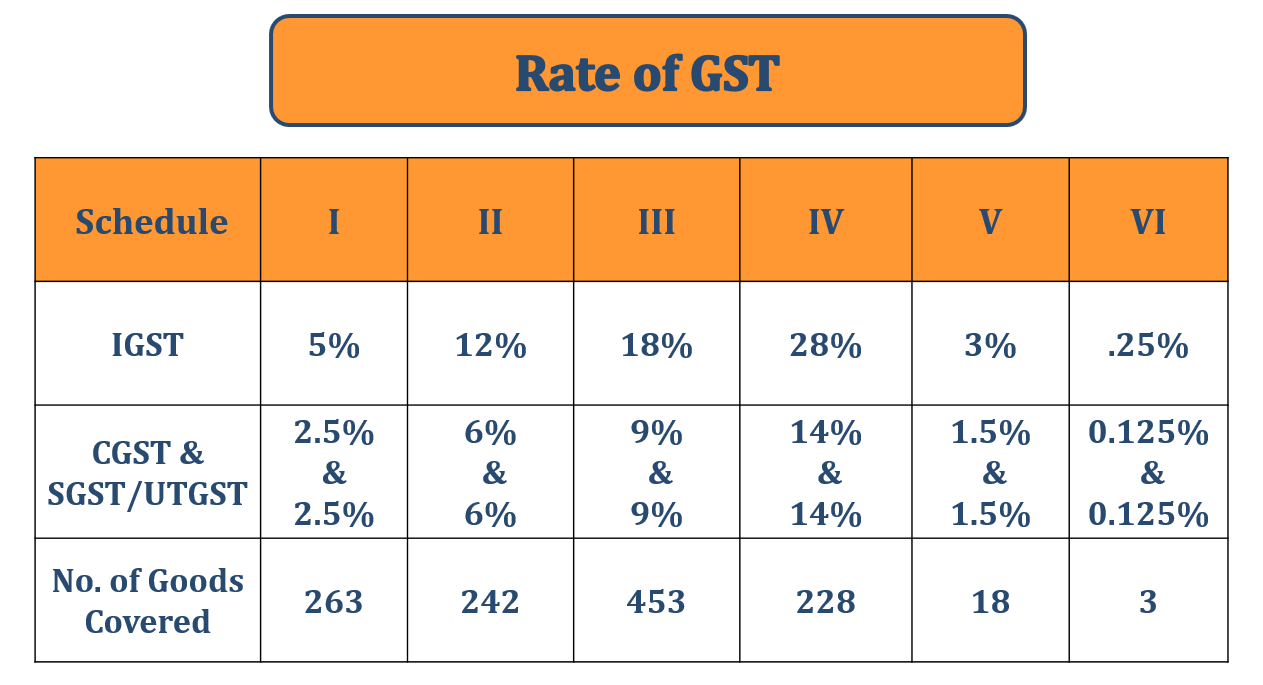
Rates of GST: -
The rate of GST will apply to the type of goods here goods are divided into six Schedule as shown in an image.
The Schedule wise rate of GST -Implementation of GST
When is Good and Services Tax(GST) Levied?
Under GST, Taxes will be collected when A taxable event occurs such as the sale of goods or services and advance paid for the supply of goods or services.
Under the old indirect taxation system, the tax was collected separately on the manufacturing of goods, sale of goods and sale of services by separate departments
Like:
Manufacturing, Excise Duty Applicable
Sale of Goods, VAT Applicable
Sale of Services, Services Tax Applicable
Now under GST same tax will be collected on a different level of production only rates of tax will vary. As shown in diagram these will be divided into 6 parts.
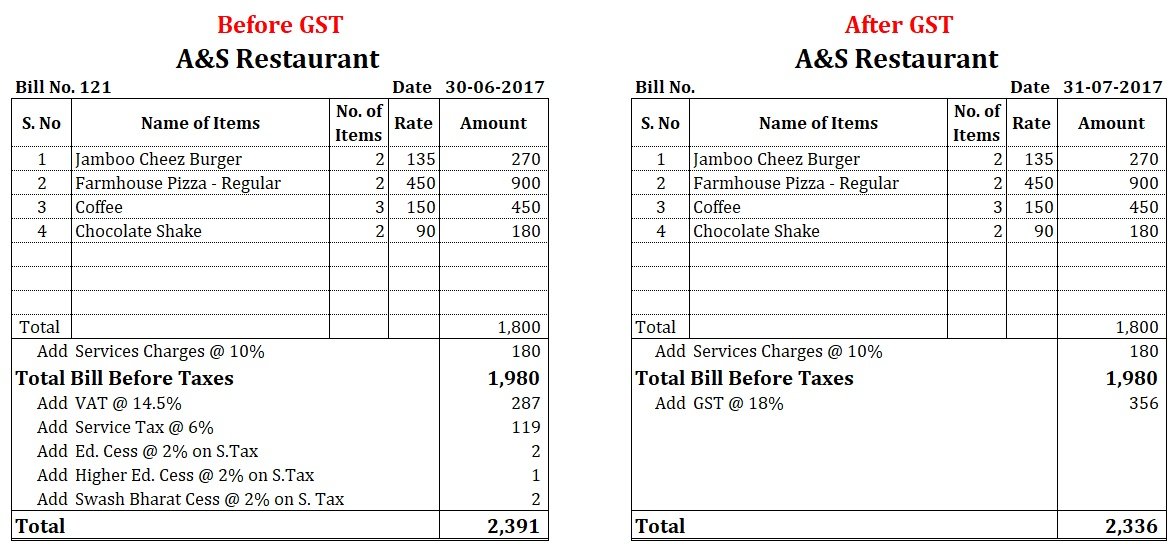
The best example of Different between levied of GST or old Indirect tax is the bill of the restaurant because in restaurant bill both items include the sale of goods as well as the supply of services.
Following are the example of this: -
Restaurant Bill Comparison - Before GST vs After GST under Implementation of GST
As the image shown that the number of taxes is subsumed into a single tax is called GST.
Thanks for reading the topic of Implementation of GST
Please comment on your feedback whatever you want.OrIf you have any question please ask us by commenting.
👤
Author & Educator
Sarbjit SinghB.Com and M.Com
Accounting & Commerce Educator
Sarbjit Singh holds a B.Com and M.Com degree and has over 12 years of teaching experience in double entry bookkeeping, financial accounting, and business studies.
❓ Frequently Asked Questions
What is the main topic of "Implementation of GST and Act of GST | with Example"?
This guide covers "Implementation of GST and Act of GST | with Example", focusing on key definitions, step-by-step concepts, applications, and revision guidelines relevant to Goods and Services Tax (GST).
Who can benefit from this guide on "Implementation of GST and Act of GST | with Example"?
It is primarily curated for Class 11 and Class 12 high school commerce, accounting, and economics students, as well as aspirants preparing for board exams or CA Foundation.
Where can I practice questions related to "Implementation of GST and Act of GST | with Example"?
You can take our custom-built interactive practice quiz directly on this page to test your understanding of "Implementation of GST and Act of GST | with Example" instantly.