Loading Tutorstips...
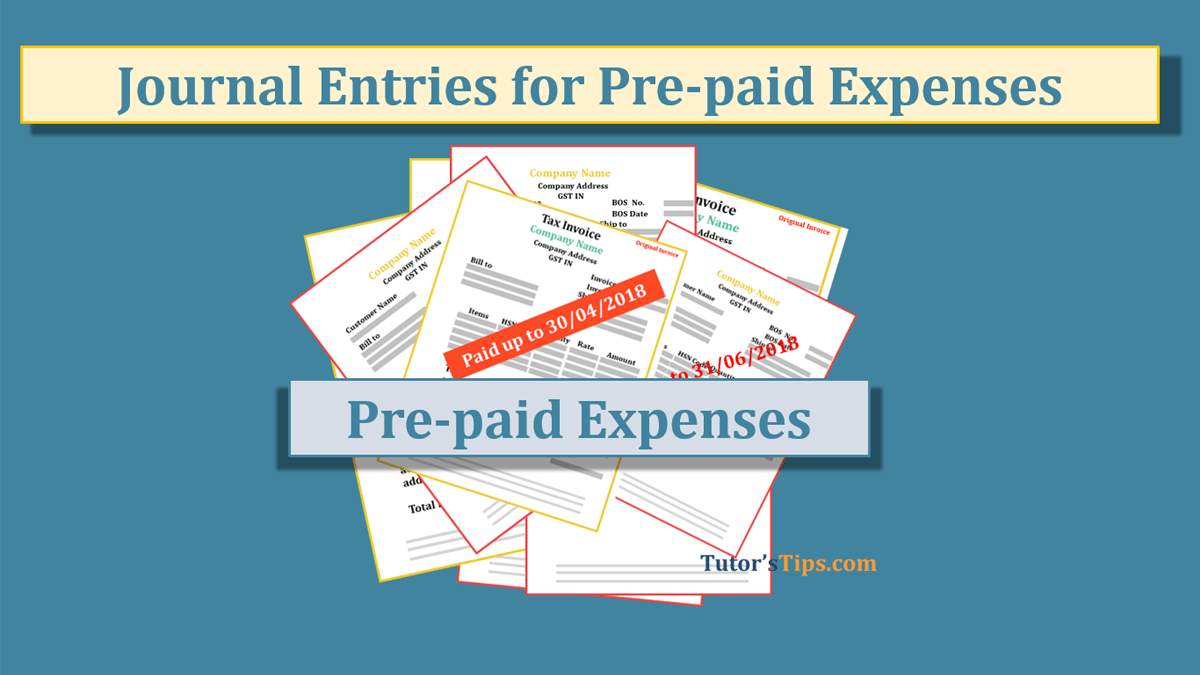
Journal entry for the prepaid expense is very simple to remember. As discussed in the previous topic, the personal rule of accounting also applied to pre-paid expenses. it is explained as below:
The prepaid expense is that expense which is not incurred in a current financial year(from 01/04/__ to 31/03/__) but paid in a current financial year. In other words, the expense is paid before it actually incurred.
Because we can claim expenses of business only in the financial year in which Financial year these are incurred not in which Financial year these are paid.
01/07/2017 Insurance premium paid for the year Rs 50,000/- insurance policy valid up to 30/06/2017.
Now, the current financial year is from 01/04/2017 to 31/03/2018
The current financial year ended on 31/03/2018. So, we can only claim the expense up to 31/03/2018 in the current financial year.
So. the payment from the date 01/04/2017 to 30/06/2018 (insurance policy expiry date) is the prepaid expense for the company.
Now Question is:
Total Premium amount = 50,000/-
Unexpired period = 01/04/2018 to 30/06/2018
We can calculate it byway:
Months Method: - The total months from 01/04/2018 to 30/06/2018 is 3 months:
So, 50,000*3/12 = 12,500/-
By Days Method: - The total Days from 01/04/2018 to 30/06/2018 is 91 days (30+31+30):
So, 50,000*91/365 = 12,465.75/- Round off 12,466/-
01/07/2017 Insurance premium paid for the year Rs 50,000/- insurance policy valid up to 30/06/2017.
This is the entry of expenses paid for the current financial year and an amount of unexpired period or payment for the expense of the next financial year is Rs 12,500/- app. (calculated above).
So in this transaction, we will treat three accounts with the golden rules of accounting shown following.
The journal entry for the transaction is the following:
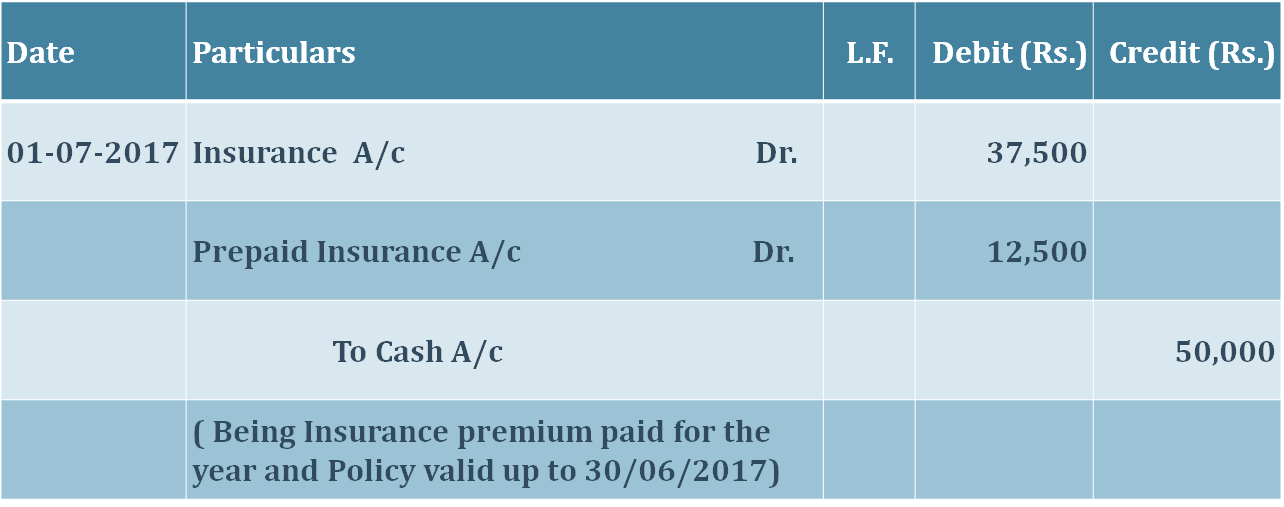
01/07/2017 Insurance premium paid for the year Rs 50,000/- insurance policy valid up to 30/06/2017.
So now, we will treat these three accounts with modern rules of accounting shown as following.
Insurance A/c -> Expense a/c -> Expense Rule-> increase in expenses-> Debit
Cash a/c -> Asset A/c -> asset Rule -> Decrease in asset-> Credit
Prepaid Expenses - asset Account -> Personal A/c -> increase in asset-> Debit
The journal entry remains the same as above:
Accounting & Commerce Educator
Sarbjit Singh holds a B.Com and M.Com degree and has over 12 years of teaching experience in double entry bookkeeping, financial accounting, and business studies.
Journal entry for the prepaid expense is very simple to remember. As discussed in the previous topic, the personal rule of accounting also applied to pre-paid…
Class 11 and Class 12 commerce students, and CA Foundation aspirants, studying Financial Accounting.
Yes — this page includes a short interactive quiz so you can check your understanding straight away.