
Loading Tutorstips...
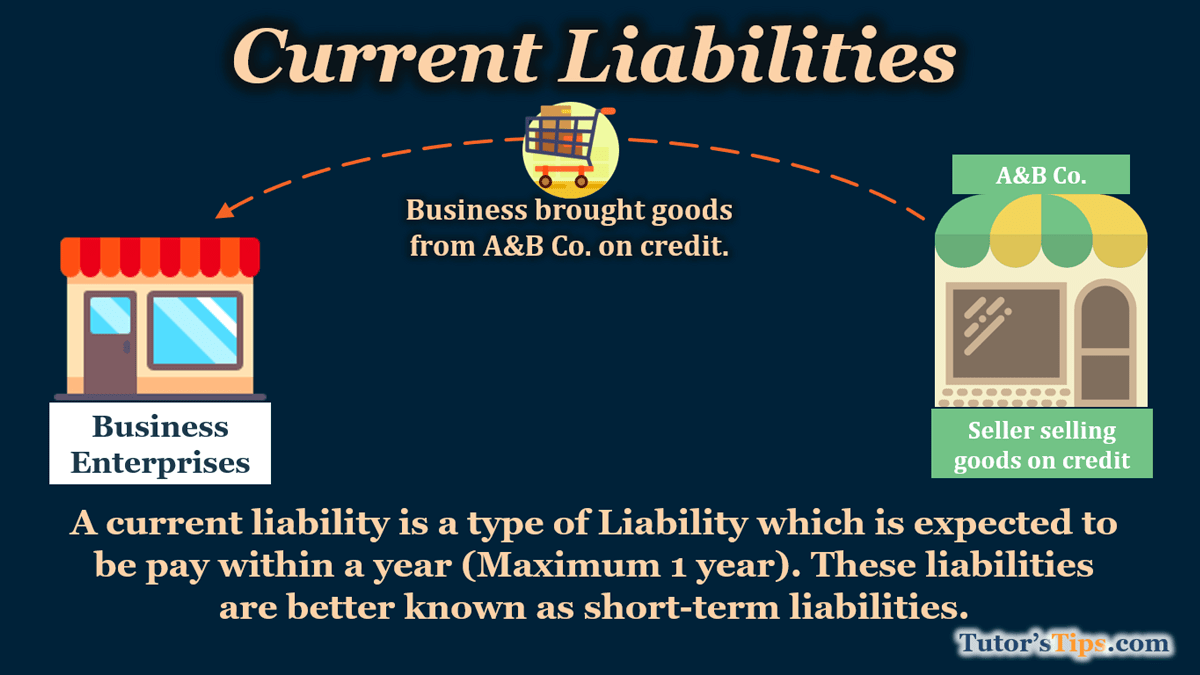
Current liabilities are a type of loan that must be repaid within one year (maximum 1 year). These loans are better known as short-term liabilities. This type of liabilities is taken to achieve the smooth operation of the business. In simple words, they fulfil the working capital requirement of the business.
Current liabilities appear in favour of liabilities in the balance sheet. The following accounts are shown in this group of balance sheets: -
The business has to pay some people or firms against credit purchases of goods or any other assets, these are classified as Sundry creditors in the financial statements.
The bill payable is a provision note. It is similar to a check, but it has a maturity date, except the expiry date, like a check.
Short Term loans include the Bank overdraft and loan from the partner, for the period which is repayable within 1 year.
Those expenses which are due but not paid due to some reasons like non-availability of funds. For example, Salary outstanding, Electricity Bill Outstanding, Rent Outstanding etc.
Those incomes which business are received prior to their due date. For example, Advance rent received, Advance commission received, etc.
The amount of Dividend which is declared but not paid to shareholder yet.
There are many types of taxes are collected from the business by the government of the country. So, if any type of tax is due but not paid will be grouped under current liability.
In India, there is some example of taxes are given below:
The placement of a current liabilities in the balance sheet, This is a group of the balance sheet which shown separately. These are shown in the following format of the balance sheet and highlighted with orange colour: -
Name of the Entity
| Balance Sheet as on 31st March, _______ |
|||
| Liabilities | Amount | Assets | Amount |
|---|---|---|---|
| Current Liabilities | Current Assets | ||
| Trade Creditors | Cash in hand | ||
| Bills Payable | Cash at Bank | ||
| Outstanding Expenses | Inventories | ||
| Advance/Unearned Incomes | Bills payable | ||
| Short term loans | Sundry Debtors | ||
| Non-Current Liabilities | Prepaid Expenses | ||
| long terms loans | Accrued Incomes | ||
| Debentures | Fixed/Non-Current Assets | ||
| Capital | Building | ||
| Add: Net profit | Land | ||
| interest on Capital |
Plant & machine | ||
| Less: Drawings | Furniture & fixture | ||
| Net Loss | Goodwill | ||
You can also read the following topics : –
Accounting & Commerce Educator
Sarbjit Singh holds a B.Com and M.Com degree and has over 12 years of teaching experience in double entry bookkeeping, financial accounting, and business studies.
Current liabilities are a type of loan that must be repaid within one year (maximum 1 year). These loans are better known as short-term liabilities. This type…
Class 11 and Class 12 commerce students, and CA Foundation aspirants, studying Terms of Financial Accounting.
Yes — this page includes a short interactive quiz so you can check your understanding straight away.


