Loading Tutorstips...
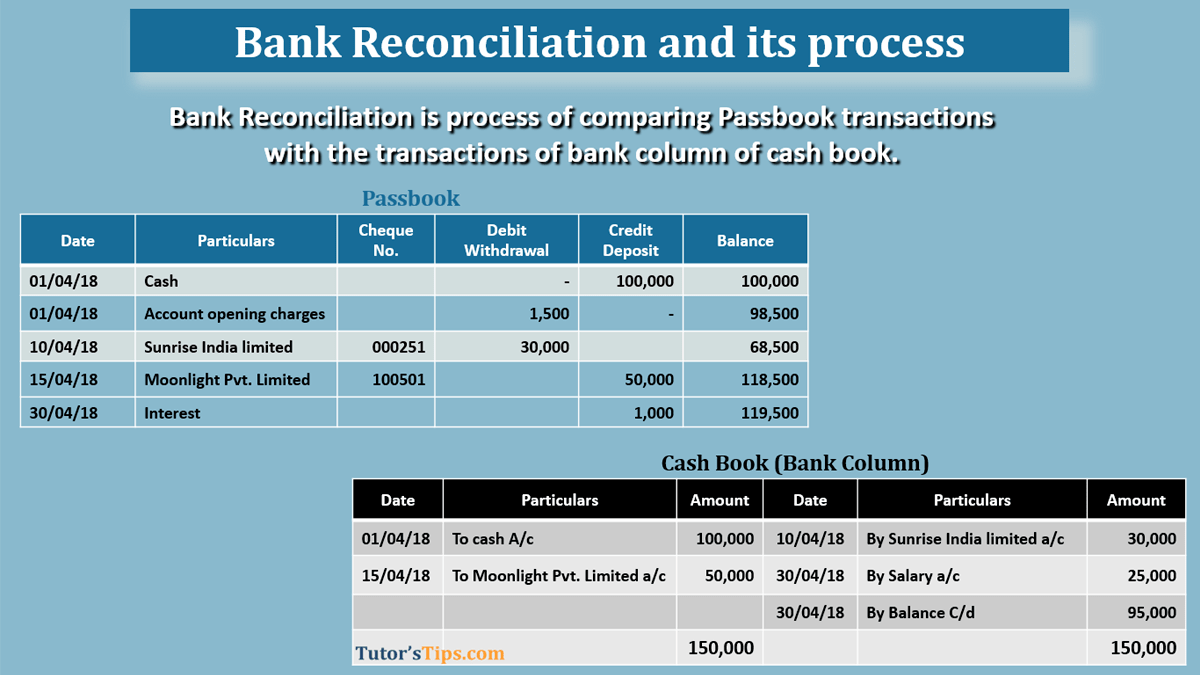
Today we are covering the technical and conceptual topic of the Bank Reconciliation Statement. So please read it very consciously and in this article, you will learn the meaning of the Bank Reconciliation Statement, Causes of Difference, Need, types of Balance, Process of preparing BRS and understand it in much better ways we will solve one example of it.
The statement which is shown the items of difference between bank balance as per cash book and Bank balance as per bank statement or passbook. It is also known as BRS. In other words, it is an explanation of the difference between bank balance as per cash book and bank balance as per Passbook (Bank statement).
Sometimes, The bank balance as per the cash book and passbook does not tally with each other, so we can know the difference between them by preparing the bank reconciliation statement.
The bank reconciliation is the process of checking the differences between a bank column of the cash book and the bank statement or passbook. We have to check all the transactions recorded in the cash book with transactions recorded in the passbook by our bank. At the end of the Financial Year BRS is attached to the financial statement of the business, if there is any difference between both balances.
Before the explanation of the BRS, you have to know the meaning of the Passbook or bank statement. So, it is explained as follows: -
We have recorded all bank related transactions in the bank column of the cash book. Similarly, the banks also maintain their customer's accounts in their books of account. Statement of the account given to the customer by the bank is called Passbook. It shows the actual balance of a particular customer with the bank.
The format of the Passbook is shown as follows:-
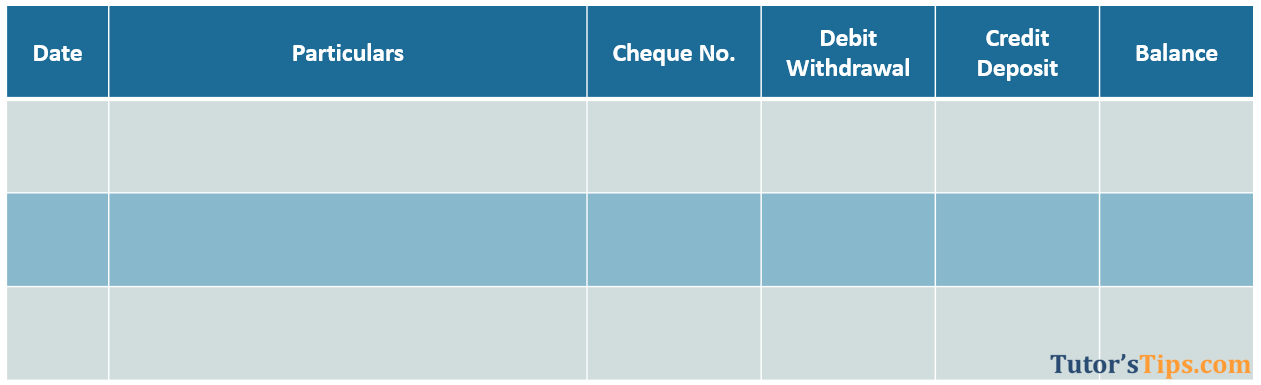
Explanation of column of Passbook
The Balance of the customer's account shown in the book of the bank is called balance as per Passbook.
There are two types of balance explained as follows we have to explain it with an example image:
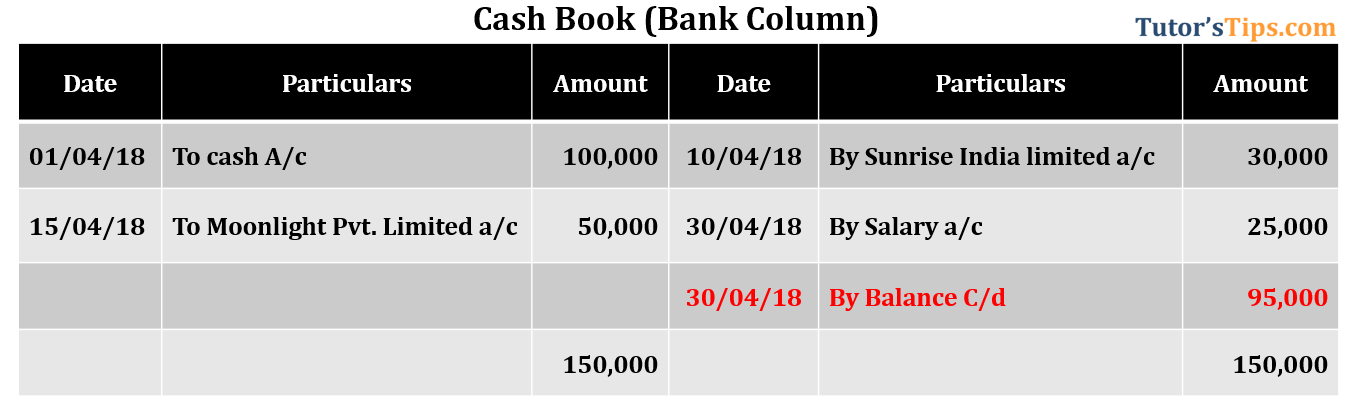
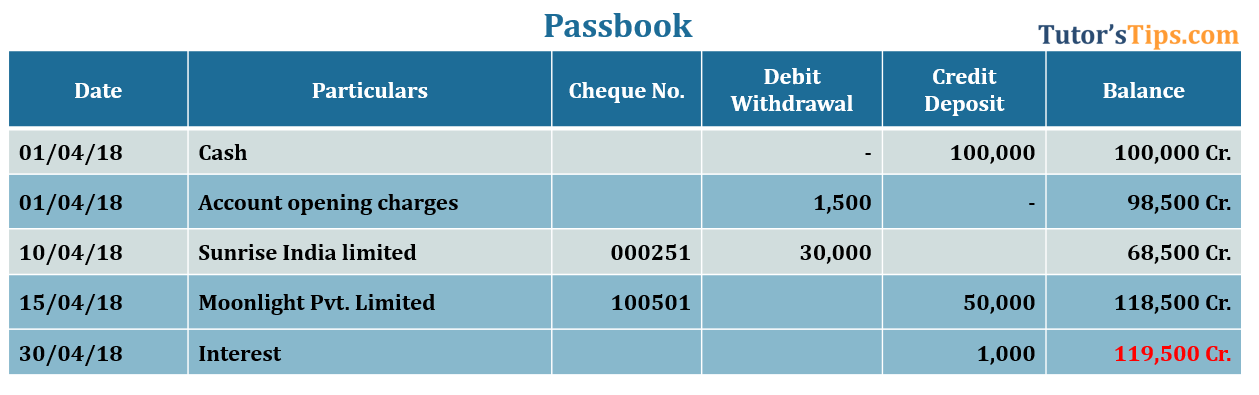
A favourable Balance means that balance that is in favour of the enterprises. these are shown as follows:-
1. The Debit Balance of a bank column as per cash book. Highlighted in the following image with red colour.
2. The Credit Balance of a bank account as per a Passbook. Highlighted in the following image with red colour.
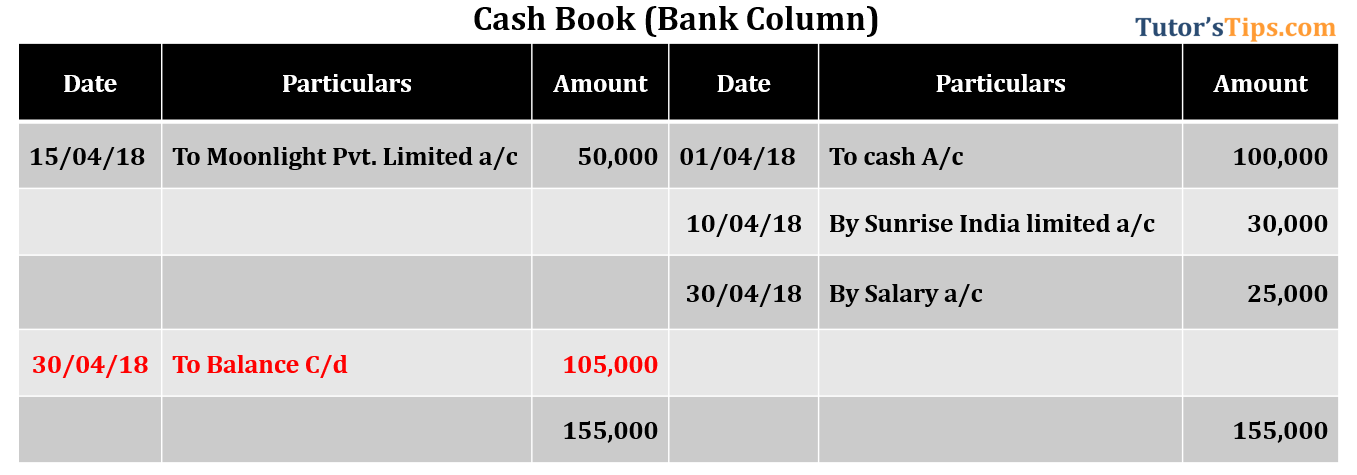
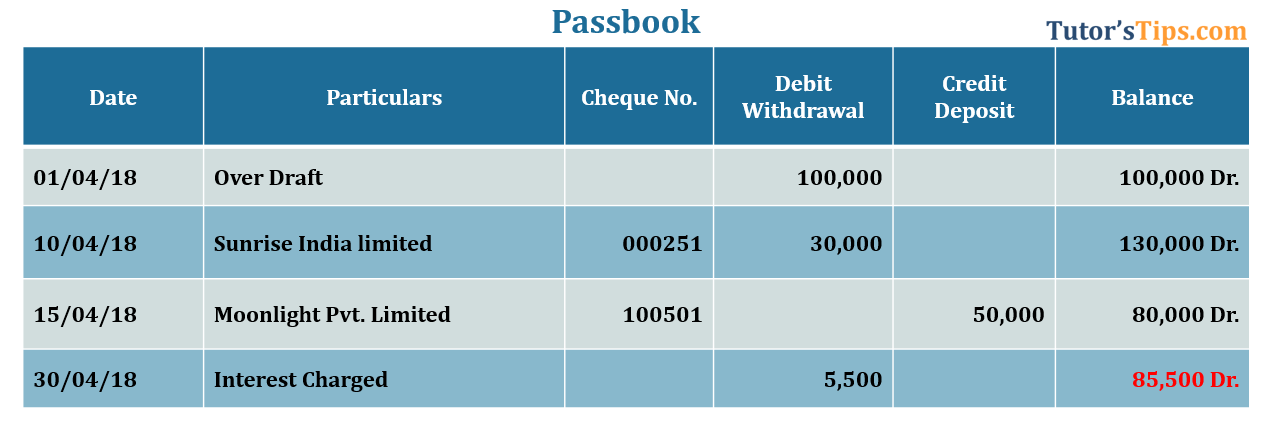
The unfavourable Balance means that balance is not in favour of the enterprises. these are shown as follows:-
1. The Credit Balance of a bank column as per cash book. Highlighted in the following image with red colour.
2. The Debit balance of a bank account as per a Passbook. Highlighted in the following image with red colour.
1st Step: - Get both statements of account and check out the difference in the balance if any then move to the next step or if tallied then we don't need to prepare Bank Reconciliation Statement.
2nd Step: - Tally the balance of both statements with each other if tallied then we do not of bank reconciliation or if not tallied then check of the transaction individual shown in the attached video and images follows.
3rd Step: - Get the un-ticked transaction from both the statements
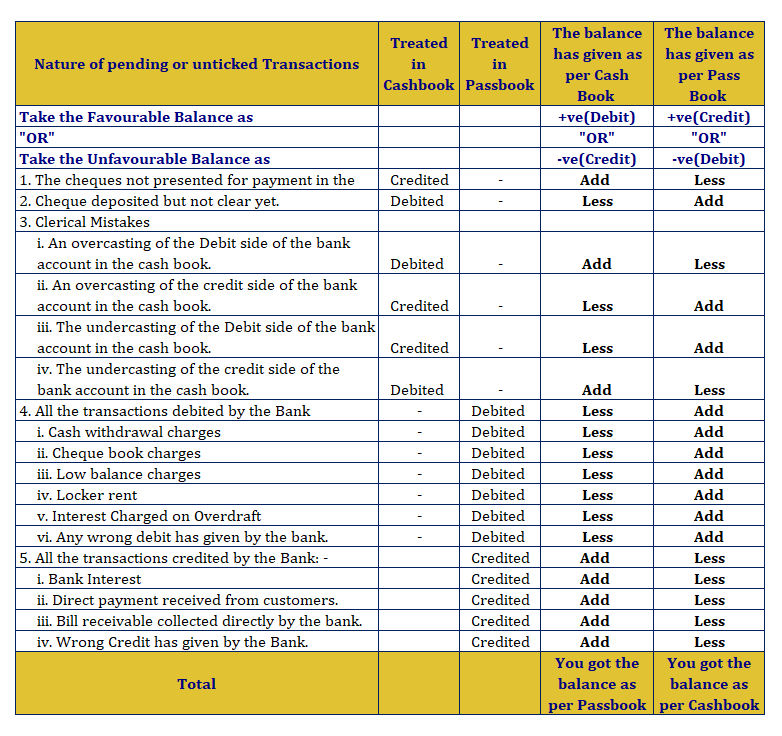
4th Step: - Arrange all un-ticked or pending transactions according to their nature shown as follows:-
5th Step: - Now, prepare a bank reconciliation statement and get to know the impact of the pending transaction on bank balance as per the cash book if we are doing a question based on balance as per cash book and check the impact of the pending transaction on bank balance as per the Passbook if we are doing a question on based on balance as per passbook.
We had treated the transactions by two aspects of accounting:-
| If un-ticked or Pending Transactions had | The balance has been given as per Cash Book | The balance has been given as per Pass Book |
| Debited to the bank account by us | Less | Add |
| Credited to the bank account by Us | Add | Less |
| Debited to the bank account by Bank | Less | Add |
| Credited to the bank account by Bank | Add | Less |
The treatment of all the transactions which you will get in the question of the BRS shown as follow:
Following are both statements of M/s _____ Ltd. like passbook and cashbook. Prepare the Bank Reconciliation Statement.
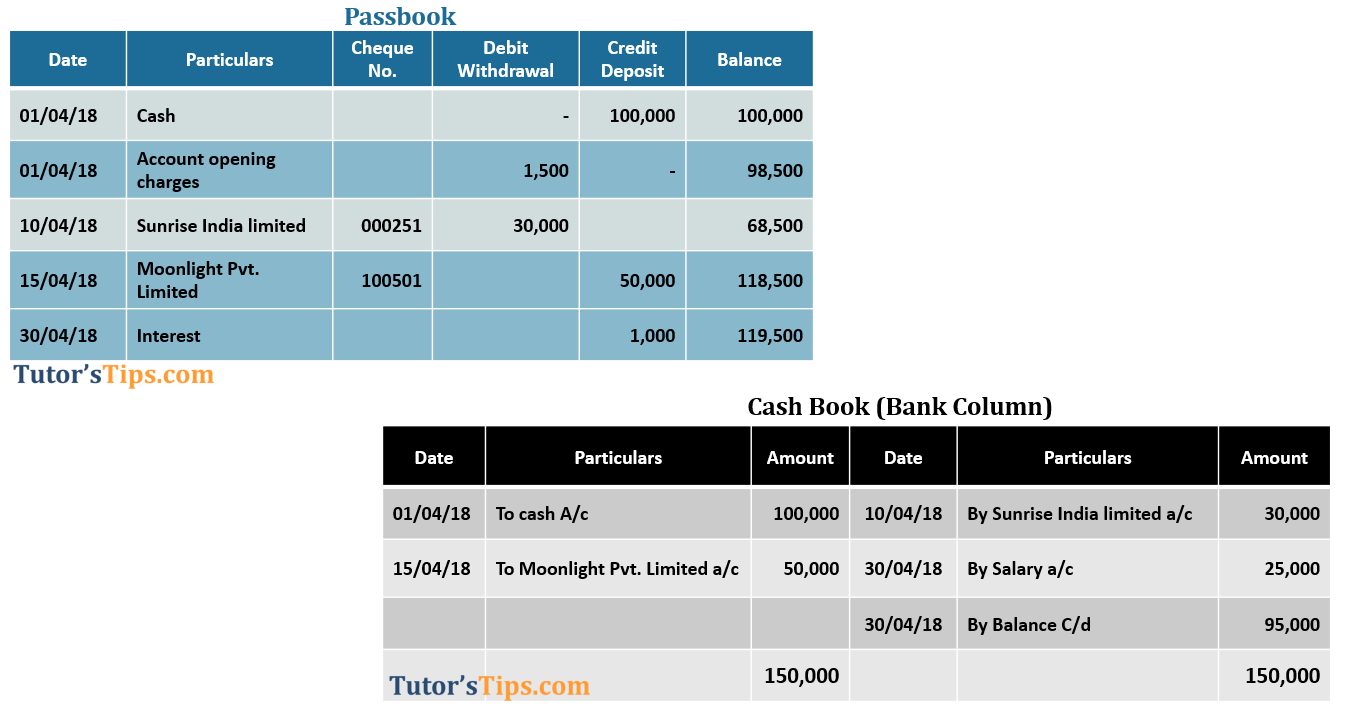
1st step:- checking the balance of both statements
2nd Step:- If there is a difference then we have to reconcile both statements.
3rd Step:- Now if there is a difference then we have to check it out by ticking individual debit transaction as per passbook with credit as per cash book and Credit as per passbook with the Debit as per cash book as shown in the below image:
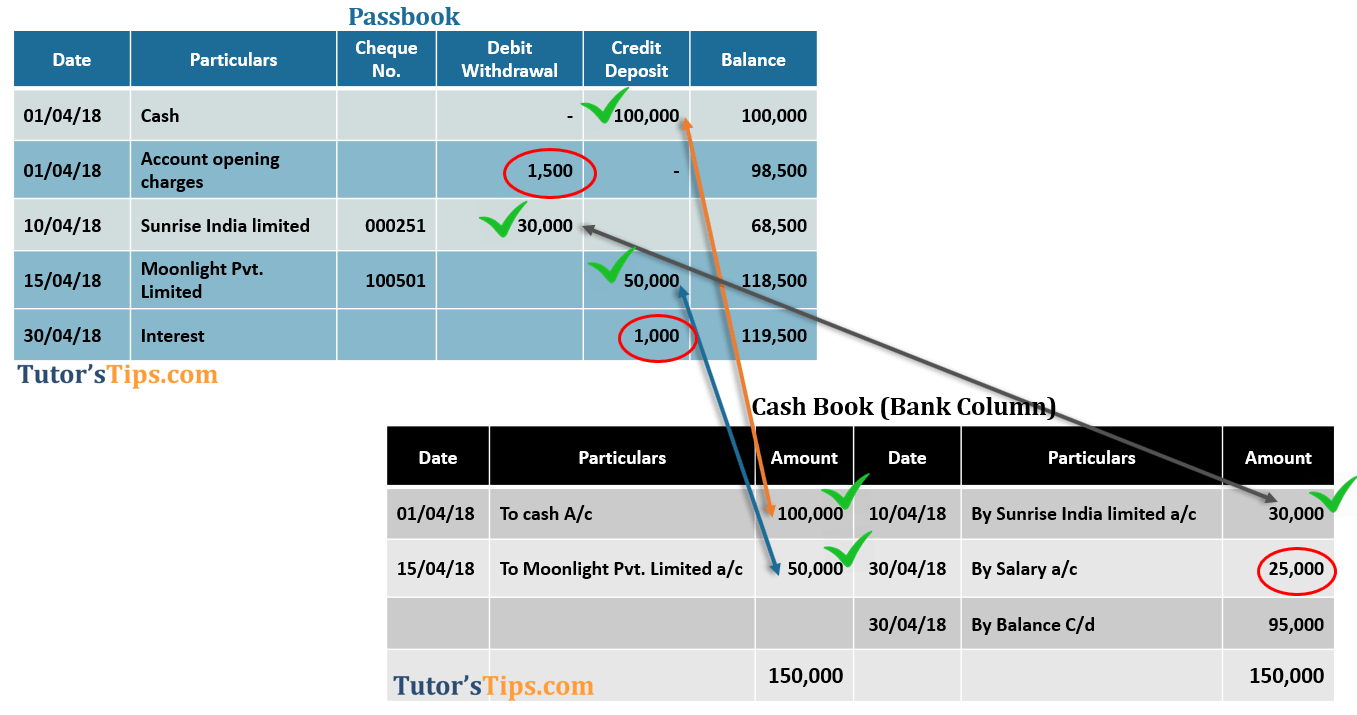
At last, we got the reason for the difference between both statements shown as follow: -
We have shown the matched or ticked(tallied) transaction with the help of different colours of arrows: -
and we have shown the not matched or ticked(tallied) transaction with the help of the red circle: -
4th Step: - Arrange all un-ticked or pending transactions according to their nature shown as follows:-
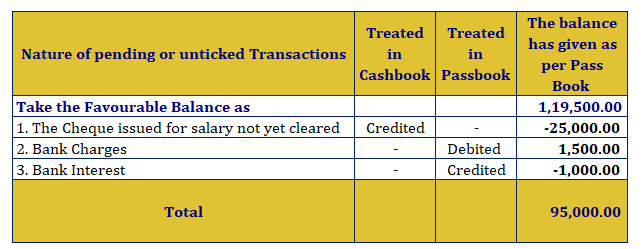
5th Step: - Now, preparing the Bank Reconciliation Statement shown in the following image: -
1. The balance has been given as per Cash Book
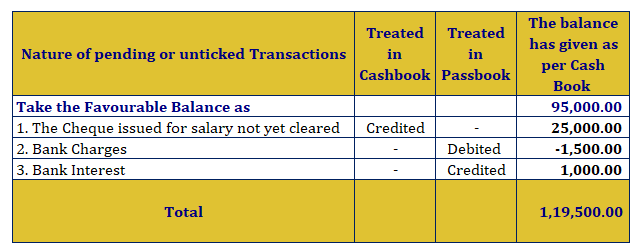
2. The balance has been given as per Passbook: -
Accounting & Commerce Educator
Sarbjit Singh holds a B.Com and M.Com degree and has over 12 years of teaching experience in double entry bookkeeping, financial accounting, and business studies.
Today we are covering the technical and conceptual topic of the Bank Reconciliation Statement. So please read it very consciously and in this article, you will…
Class 11 and Class 12 commerce students, and CA Foundation aspirants, studying Financial Accounting.
Yes — this page includes a short interactive quiz so you can check your understanding straight away.
27 September 2021
27 September 2021
8 November 2021
10 November 2021
16 October 2022
16 October 2022
28 April 2023
28 April 2023